
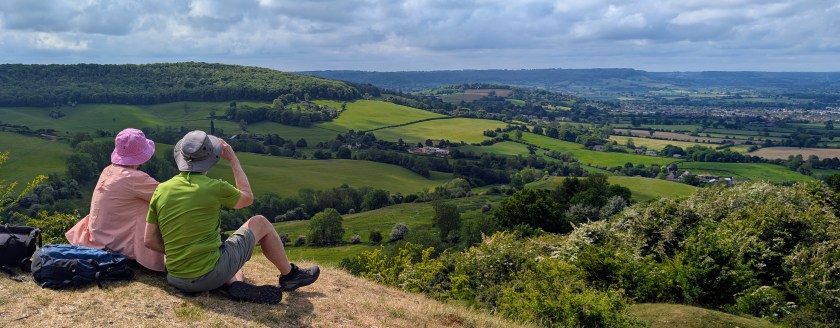
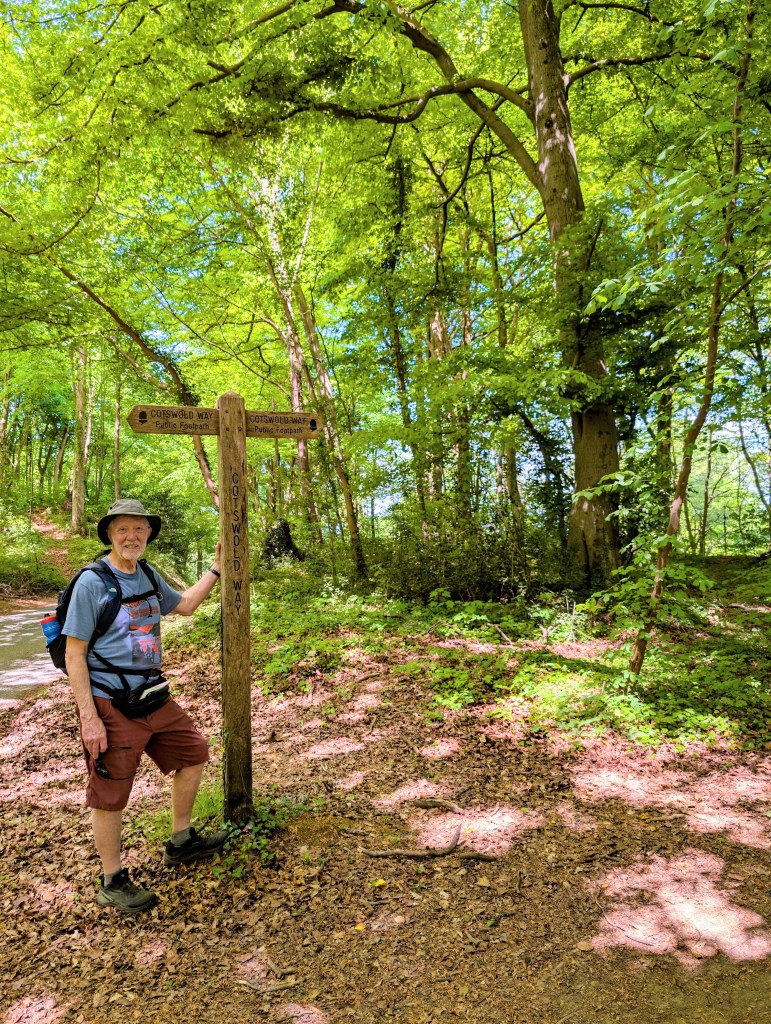
Up and down, up and down we walk. Up and along the Cotswold Edge, the western escarpment of the famous Cotswold Hills in southwest England. Down we dip, into quaint villages in what Condo Nast calls “a preposterously pretty part of the world.” Anyone who is reasonably fit can walk this 102-mile (164km) National Trail, especially at our leisurely pace – eighteen days.
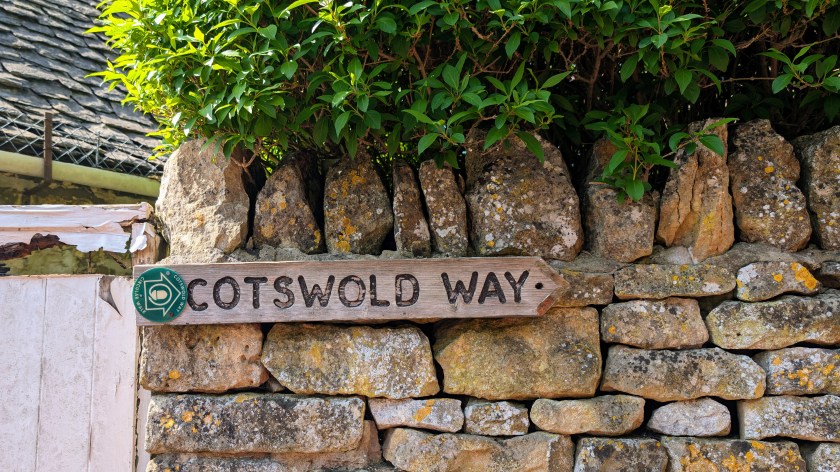
Can we tackle another long-distance walk? We have completed two of the United Kingdom’s seventeen national trails, but we are older now and not sure we can manage the daily distances we covered on the Coast to Coast and the Pembrokeshire Coast Paths. Contours Holidays has the solution: a list of Low Daily Mileage Walking Holidays, from which we choose COTW8, their longest, laziest offering and a southerly direction, beginning in Chipping Campden and finishing in Bath.

With its rolling hills, classic English countryside, and picture-postcard villages, the cutesy Cotswolds is one of England’s top destinations. Do you need more reasons to walk the Cotswold Way? Here are ten: it’s interesting, pretty, historic, easy, safe, friendly, comfortable, has options, it’s good exercise, and fun.
It’s interesting.
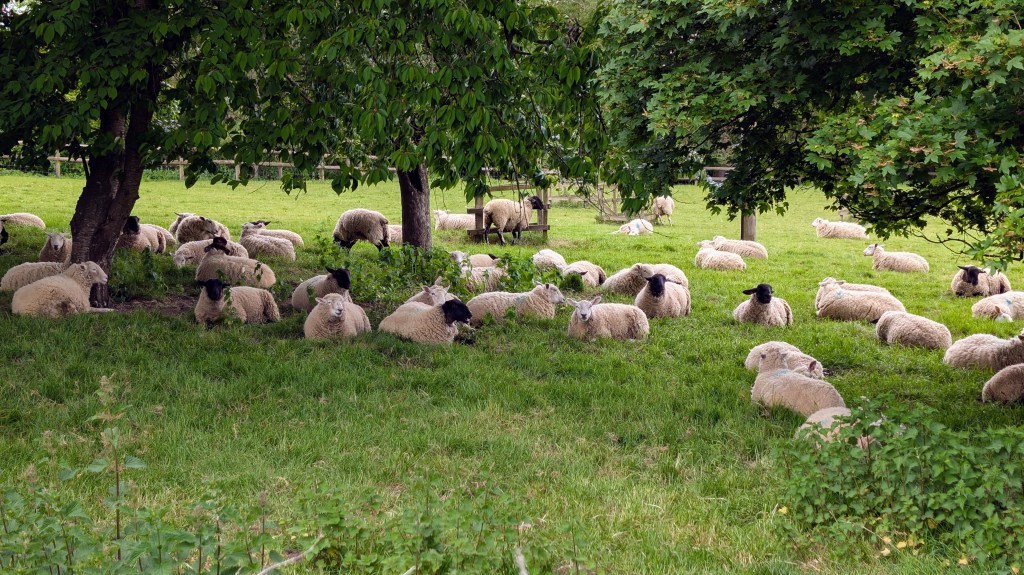
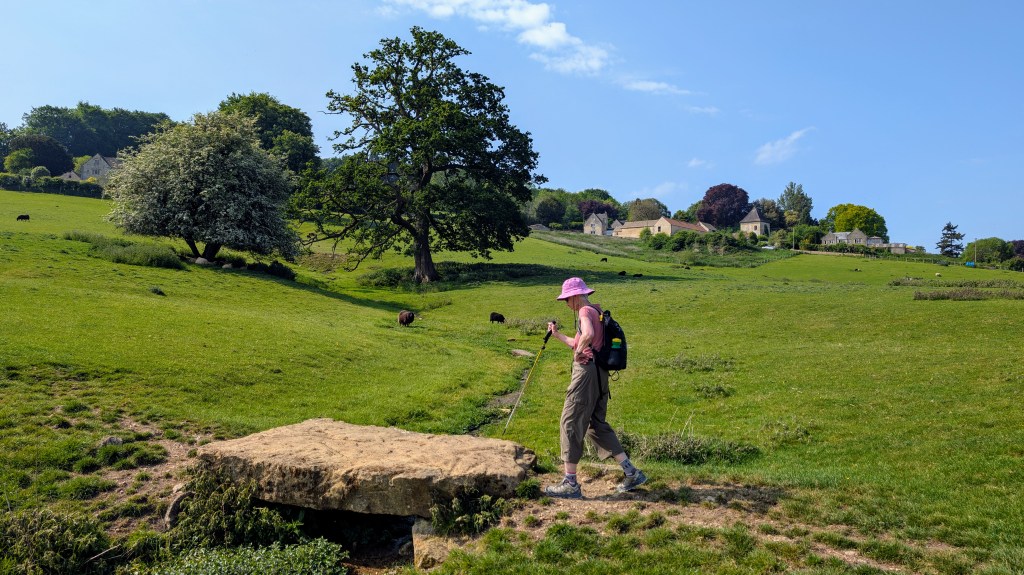
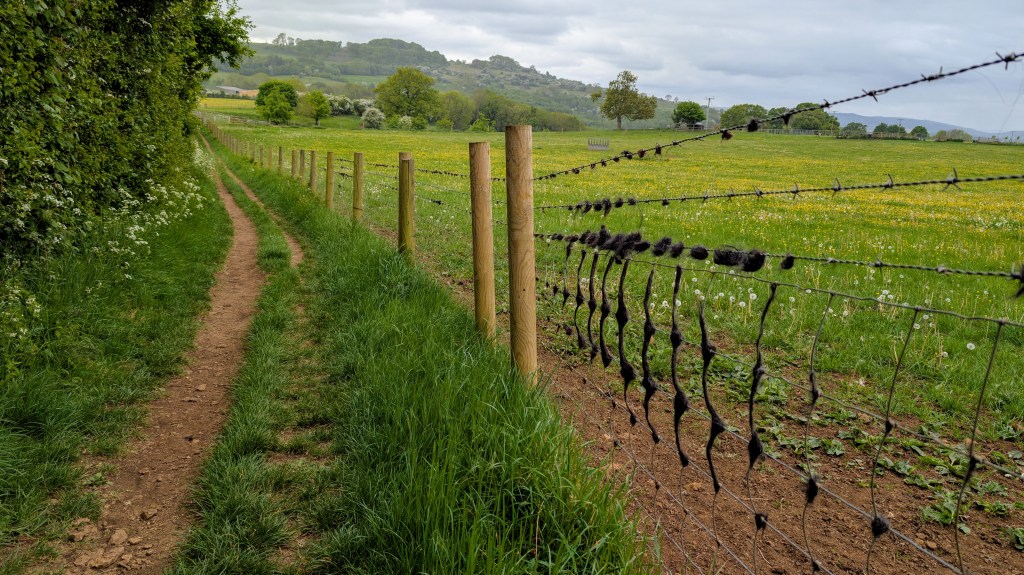
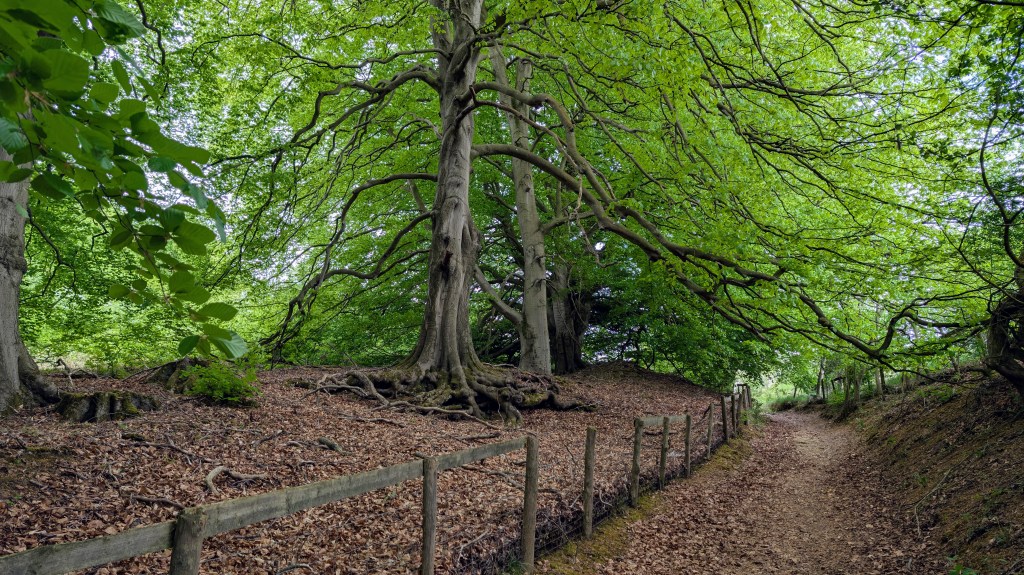
What a variety of landscapes and terrain! Sheep grazing in hillside fields, dry-stone walls, wildflower meadows, beechwood groves, stone villages and monuments – the Cotswold Way is ever-changing and captivating. This is not a boring walk.
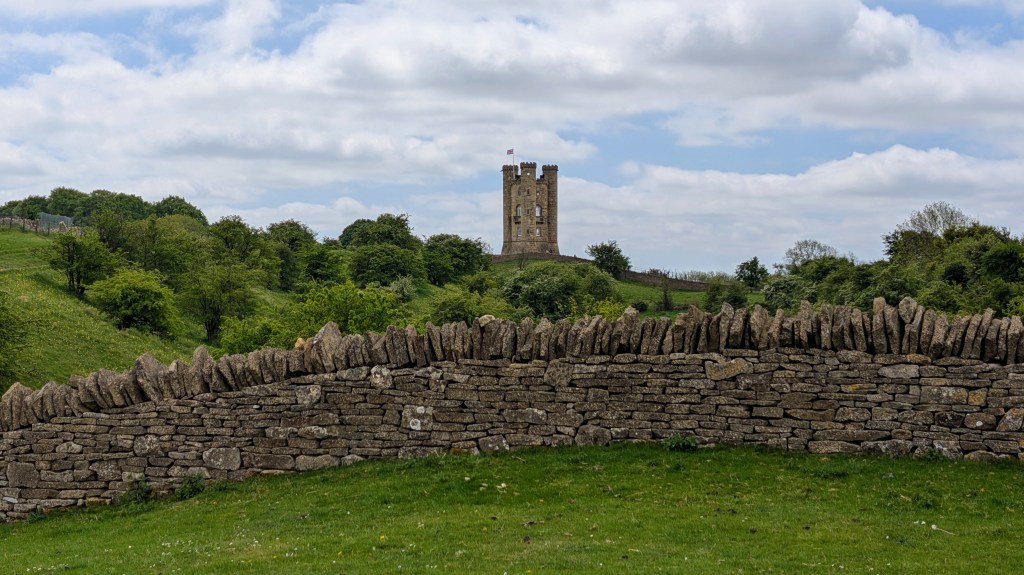
The small size, random shape, and varied colours of the fields give a whimsical, miniature-world feel, so unlike the vastness of our home country, Canada.
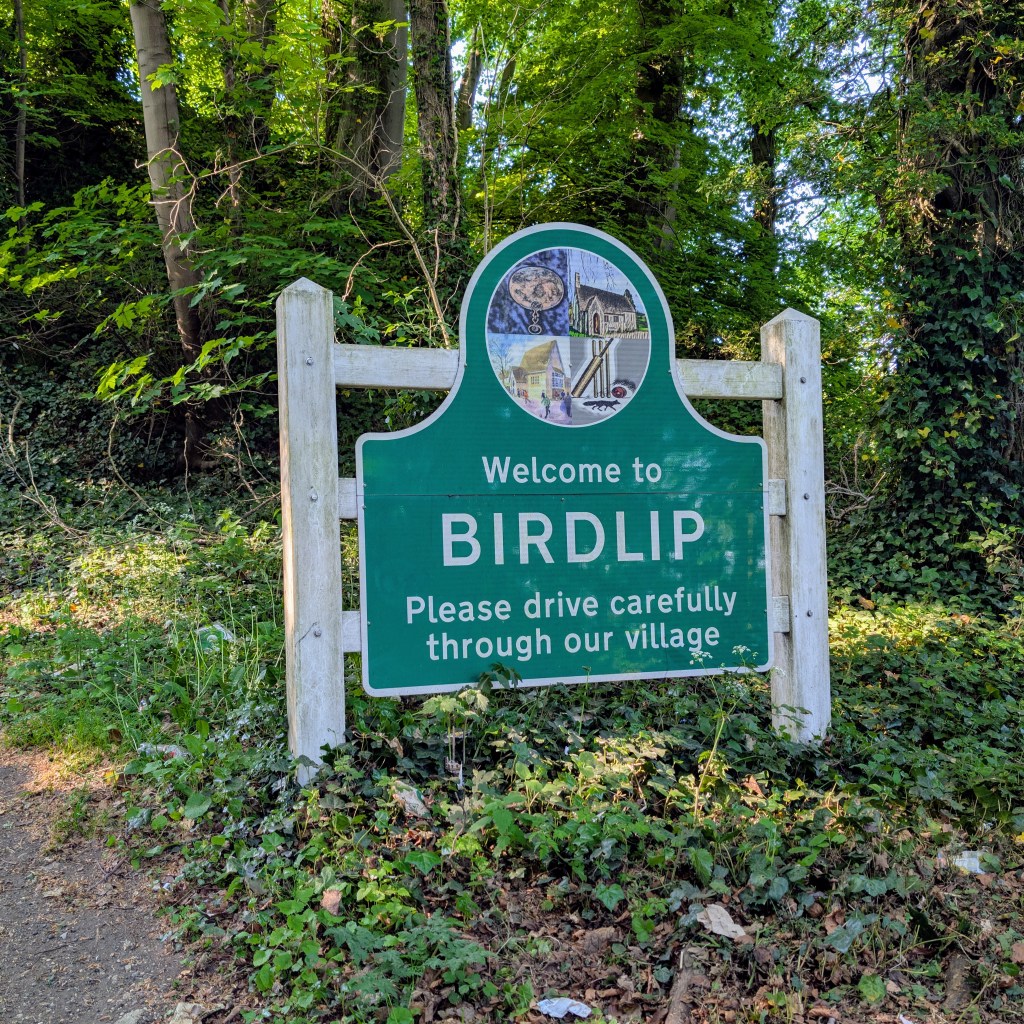
The village names are interesting, too: Birdlip, Wotton-under-Edge, North Nibley, Chipping Sodbury.
It’s pretty.
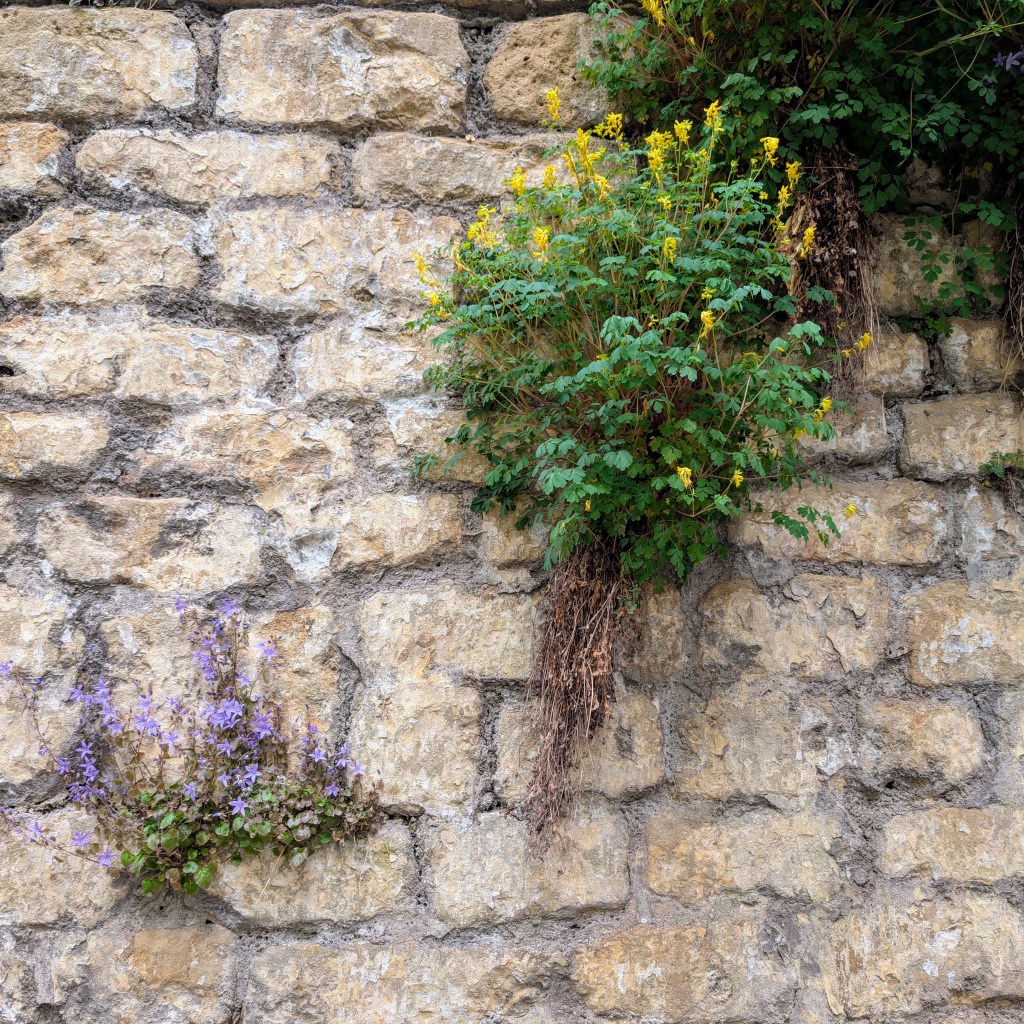
The Cotswolds is a preposterously pretty part of the world at any time of year, according to Conde Nast Traveller. We go in early May and are treated to the particularly pretty Spring colour pallette: white (and a few black) little lambs, bluebells, wild garlic, flowering hawthorn, Early Purple Orchids, Wisteria in bloom.
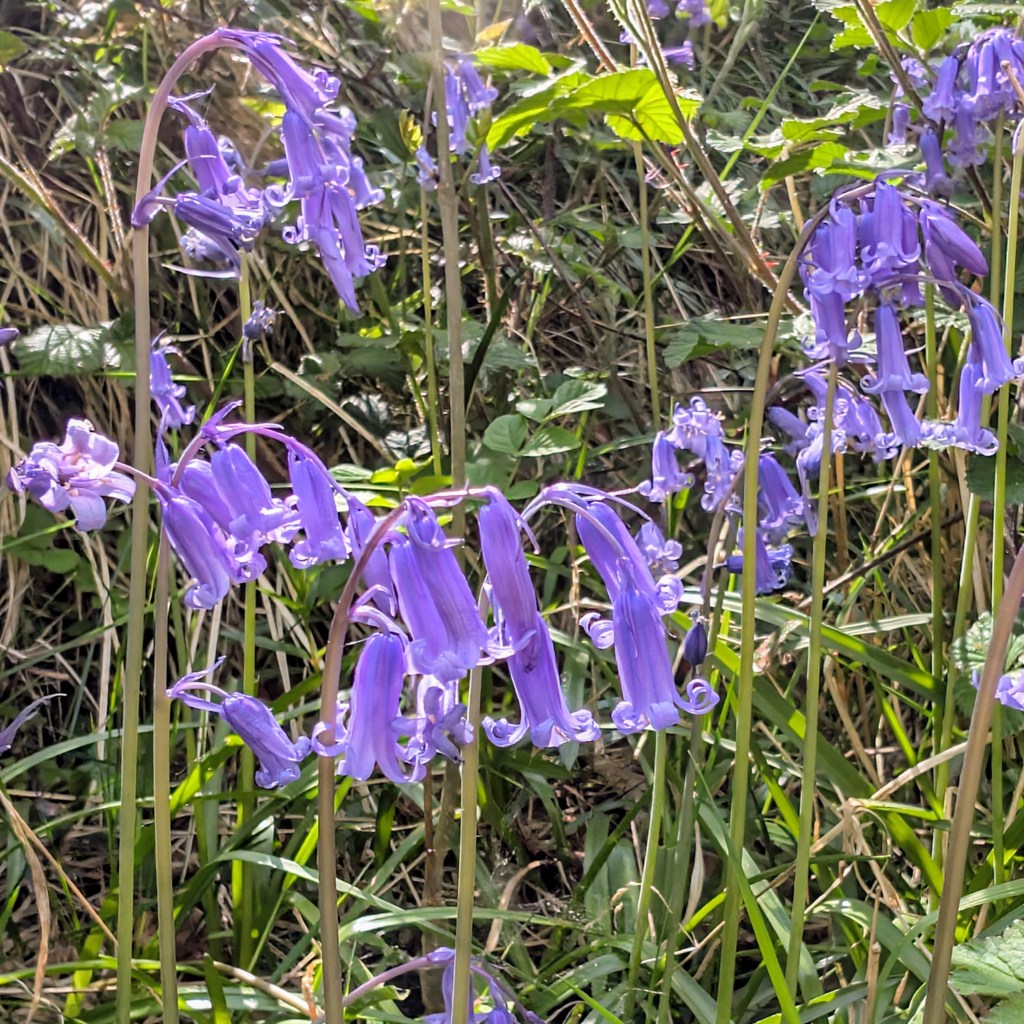

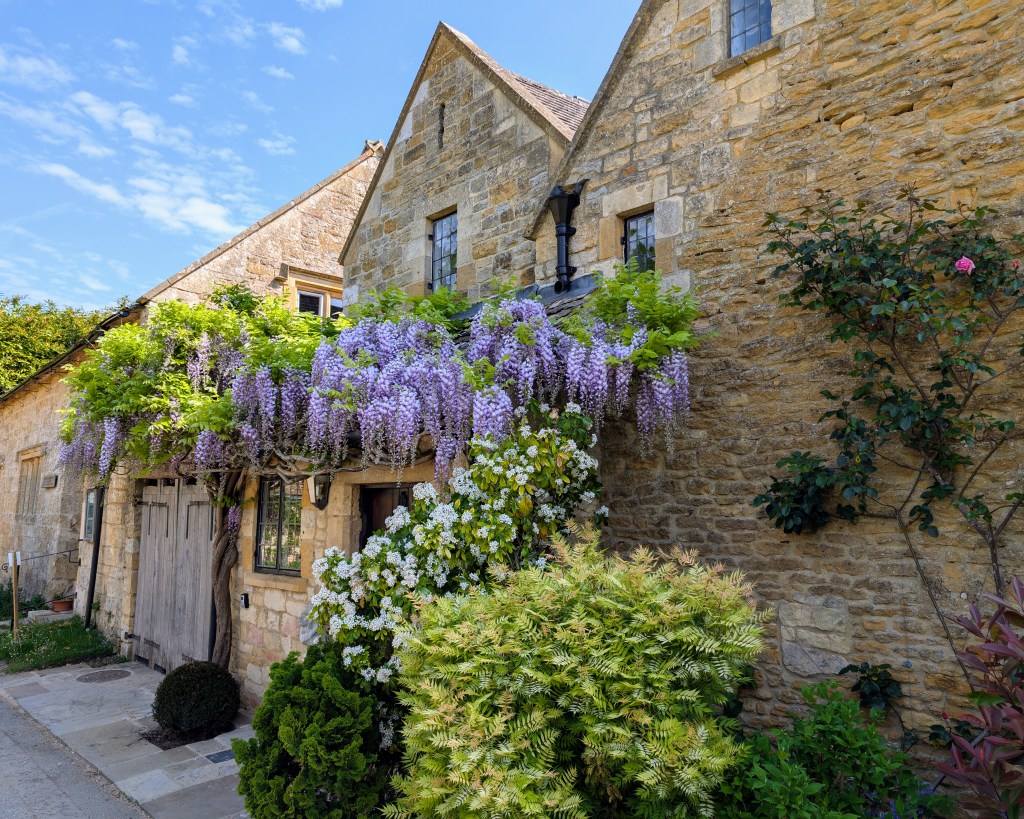
Limestone gives the Cotswolds its distinctive character. Limestone is everywhere – in cottages, churches, walls, ancient monuments. The colour varies along the trail, from warm honeyed tones to golden brown to cool greys to creamy white.
It’s historic.
The Cotswold Way is a walk through history, though not in chronological order.


Ancient sites include numerous Iron Age hill forts and burial tombs, some dating from 3000 to 4000 BC. The trail passes medieval wool markets, towers, castles, battle sites, the Roman Baths, and churches of intricate architecture.
It’s easy.
As long-distance trails go, the Cotswold Way is an easy walk, especially at our pace (fifteen walking days plus three extra days).
You can make it harder by making it a seven to ten day trip, which is what the official guidebook suggests. Even harder? Chase the Fastest Known Time: seventeen hours twenty-seven minutes.

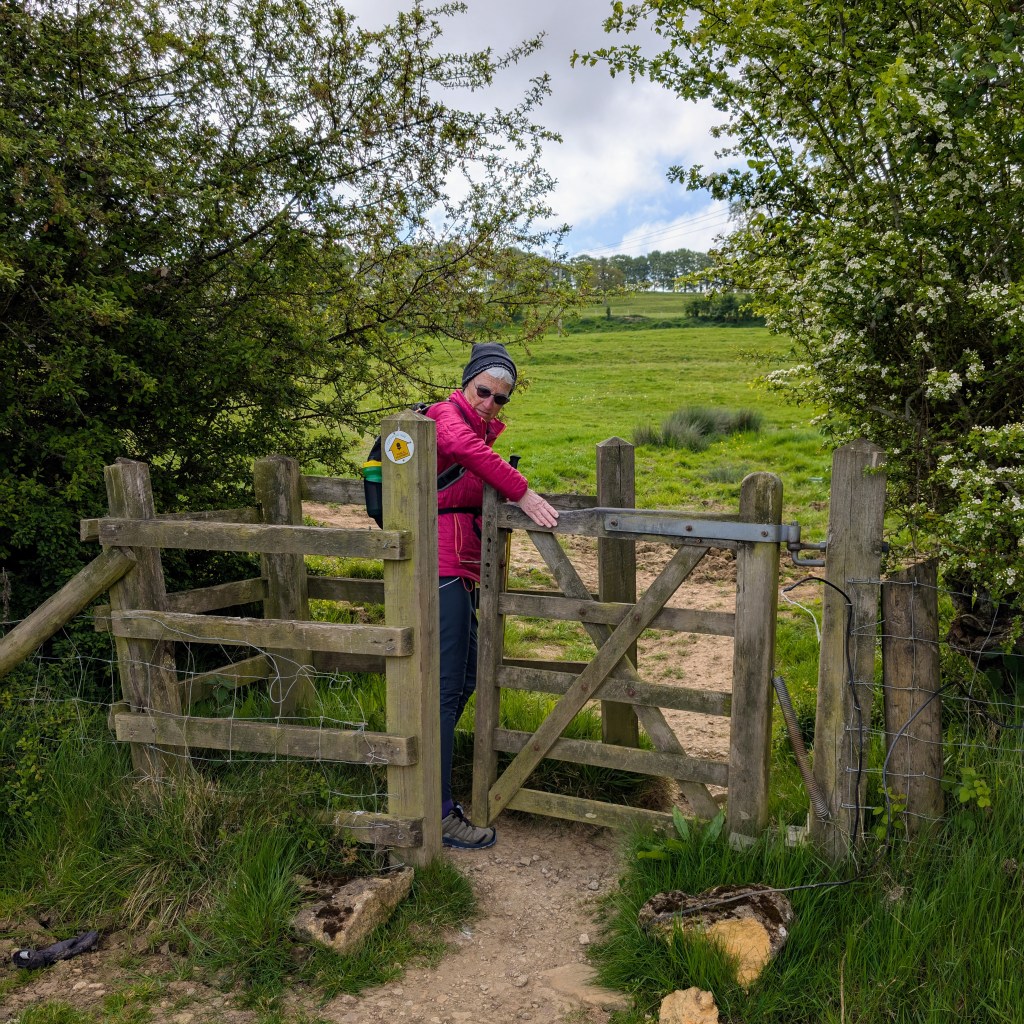
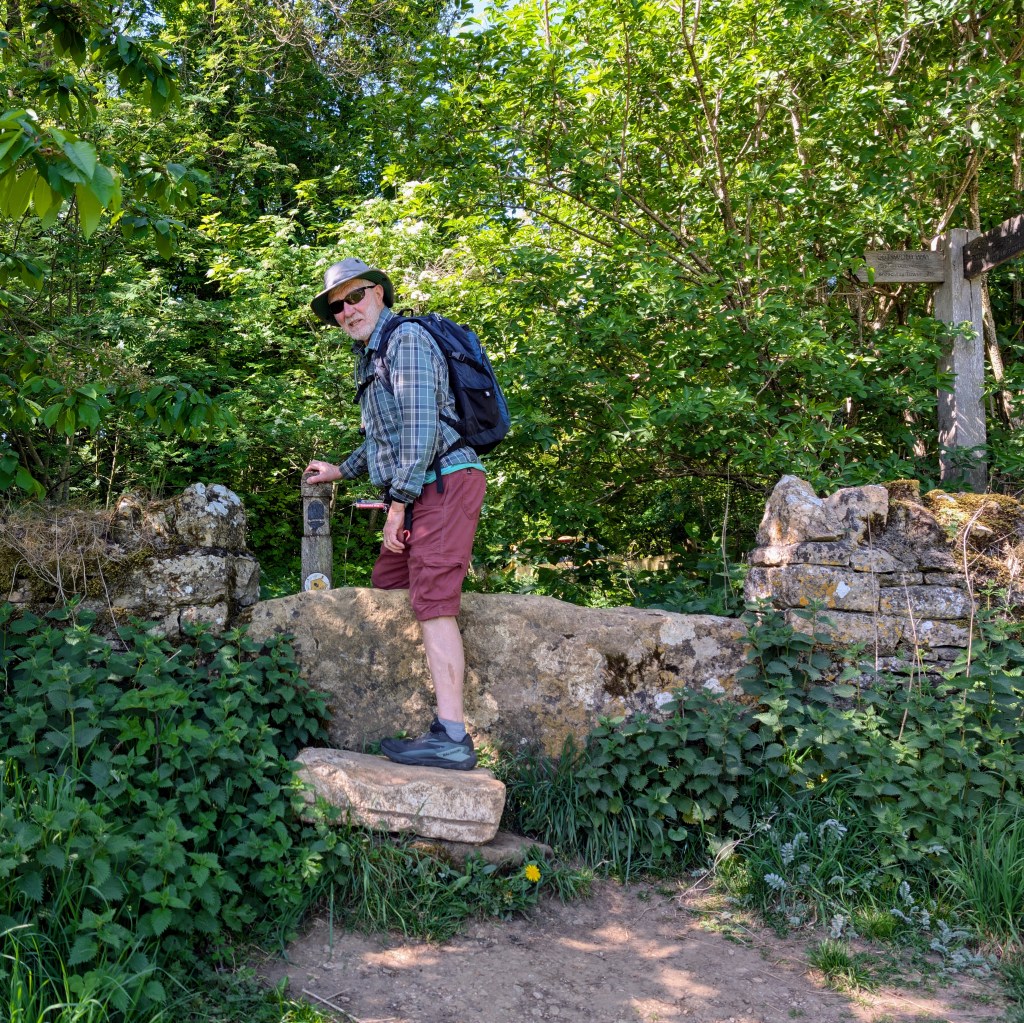
While not technically demanding, the Cotswolds Way has a lot of ups and downs. The trail has what’s called a scarp and dip landscape: alternating steeper scarp slopes and gentler dip slopes. Along the way, there are dozens of farm gates, kissing gates, and stiles. The gates are not difficult obstacles, but they do need to be respected and closed carefully to prevent livestock from escaping.
It’s safe.
There are no bears, no biting insects, no exposures or major trail hazards to cause a slip, trip, or fall. The route is well-marked, so it would be difficult to get lost.
We could be hit by an errant golf ball (the trail transits several hilltop golf courses). Calves and colts chase us across a few fields, but they are just curious.


Motor vehicles are the only significant hazard. When the trail crosses a roadway or when heading off-trail to our accommodation, the traffic is terrifying. In Dursley we look so frightened that a shopkeeper leaves her store to help us cross the street.
It’s friendly.
The locals are friendly. Even the trail runners sporting race bibs say “you alright?” (that’s hello in British English) as they huff-and-puff past us. Most of the locals we encounter are walking a dog or two, but some are on the trail for other reasons: searching for rare butterflies, observing a nest of skylarks, monitoring a family of swans, visiting their favourite hill fort, or planning their route for the upcoming Cooper’s Hill cheese-rolling race (where participants race down a steep hill chasing a wheel of Double Gloucester cheese).
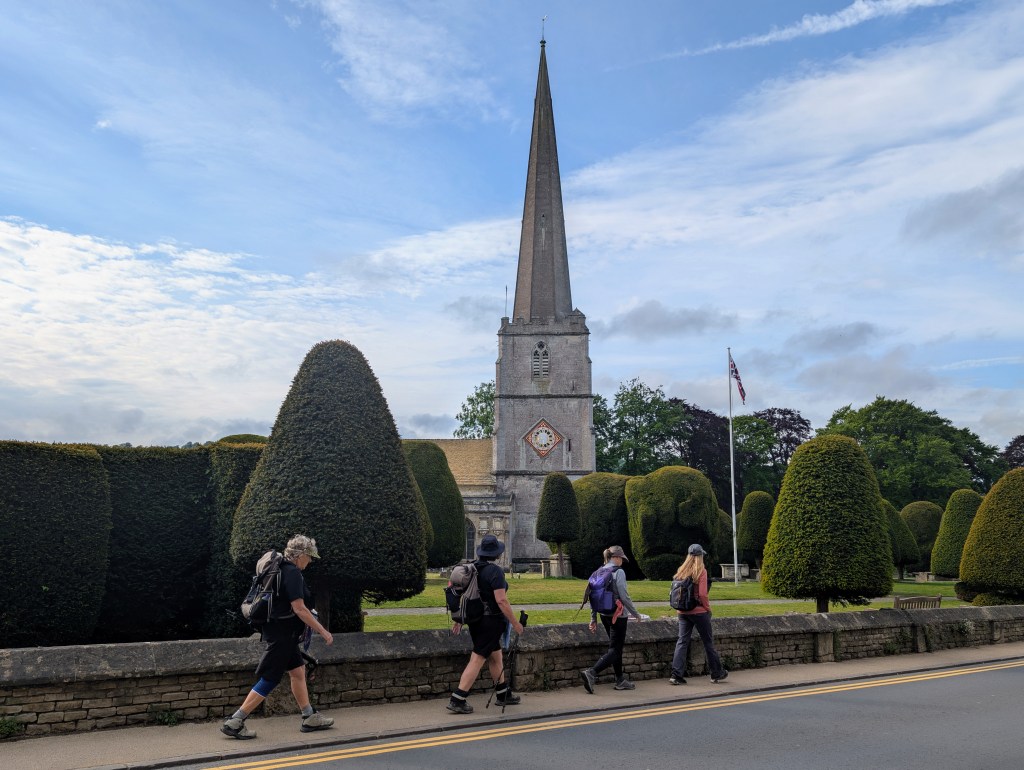

The long-distance walkers have less time to chat, because they are on mission to complete their daily distances. We meet one Canadian, but the other through-walkers are from the USA. Those from northern border states (New York, Vermont, Minnesota) are more willing to stop and talk, perhaps because they are more familiar with Canada. One lady from New York was in disguise, wearing a Canada t-shirt.
It’s comfortable.
Tea rooms built in 1693, with rooms named for breeds of bantam chickens. A 15th century coaching inn. A 17th century English country house. A farmhouse in a small village. Guesthouses.
We stay in sixteen different accommodations, with these attributes in common: they are comfortable, they have character, and the hosts go above and beyond to be welcoming to walkers. Lindsey drives to the next village to return a sun hat we have left behind, Denise advises us on hikes and where to find the best Sunday roast dinner, and Ray (like the sunshine) shows us his workshop and his custom door-in-progress. Crossways Guest House has anticipated a walker’s every need, even supplying a pair of tiny scissors for snipping open your packets of in-room coffee.
It has options.
The Cotswold Way has two route variants and one re-routing, and extra days can be added to allow for side trips.
There are two opportunities to choose between a full, scenic route and a shorter, more direct option. We choose the two scenic options: along the canal to Selsley Common and circumnavigation of Stinchcombe Golf Course.
Near Tomarton we encounter a trail re-routing, with a warning sign about “persistent anti-social behaviour.” Our guidebook warns of nudists; the taxi driver mentions indecent acts, which he leaves to our imagination. We take the diversion.
We add three extra days: at the beginning (Chipping Campden), middle (Painswick), and end (Bath) of the Cotswold Way.
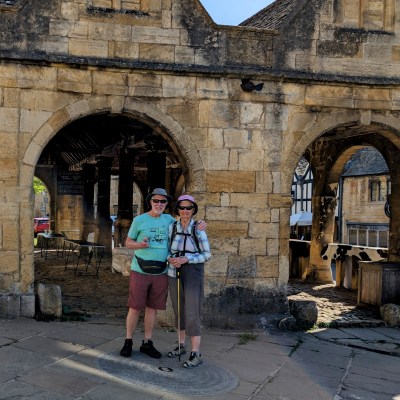
In Chipping Campden, known as the Jewel of the Cotswolds, we stroll past elegant, historical buildings and are introduced to the countryside on the Chipping Campden to Broad Campden Circular Walk.
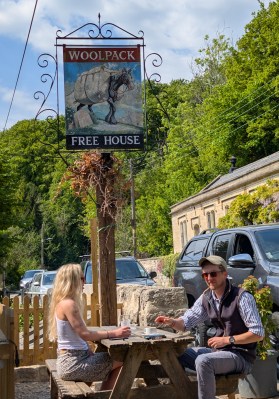
Painswick with its ancient stone buildings and ninety-nine sculpted yew trees gets our vote for prettiest village. The Slad Valley Circular Walk is an “energetic” (that means challenging) day-hike from Painswick through the countryside to Slad, known for its connection to the author Laurie Lee’s 1959 book Cider with Rosie. The pamphlet calls this a two-hour walk, but somehow this takes six hours, in part because we stop for Sunday roast in the vine-covered terrace of the 300-year-old Woolpack Free House (pub).
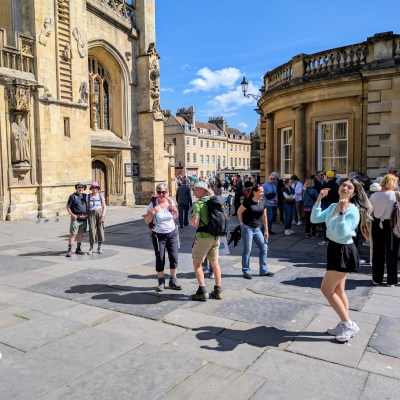
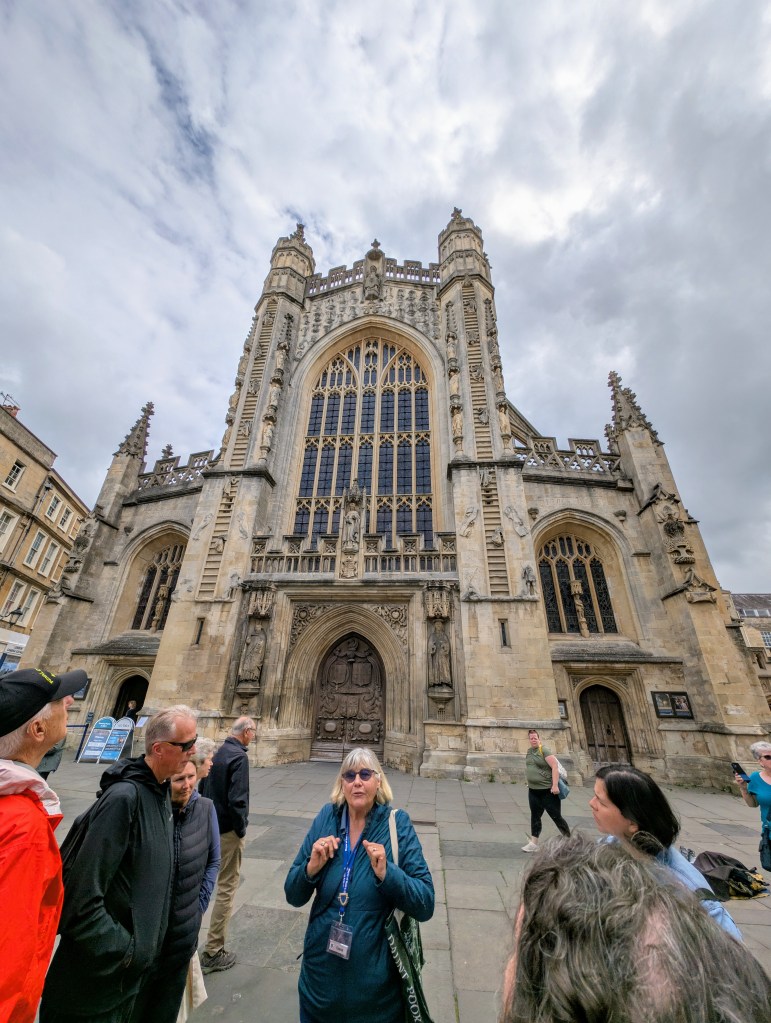
“Oh! Who can be ever tired of Bath?” Jane Austen wrote this famous line in Northanger Abbey, published in 1803. Two hundred years later, Bath is a UNESCO World Heritage Site, attracting mobs of tourists, including us, to its architecture and attractions such as the Roman Baths and the elegant abbey. The best part: the free (and no tips accepted) two-hour historic walking tour offered by the Mayor of Bath’s Honorary Guides.

It’s good exercise.
“You’ve really pushed yourself recently,” says Doug’s Fitbit, but we never feel exhausted (well, maybe one day).

Doug’s Fitbit records nearly half a million steps (450,020) and 327 km, double the official trail distance, due to side trips, scenic routes, off-trail accommodations, and inaccuracy of the device.
It’s fun.
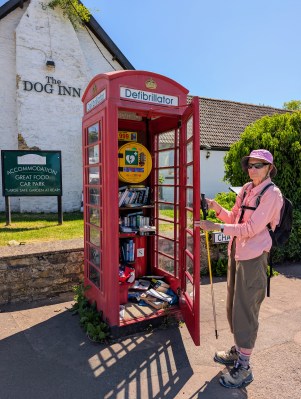
Fun is subjective. For us, it’s fun to walk through changing landscapes and kissing gates, with hours to contemplate the meaning of life and what to order at the next pub meal: will it be meat pie-of-the-day or fish and chips with mushy peas?
Are we having fun yet? Doug’s reply: I’ll tell you at the top of the hill.
If you go
Using a walking holiday company will simplify your planning process by arranging accommodation and for your bags to be carried. We are happy to recommend Contours, but there are many companies from which to choose.
Pay attention to the check-in times at each accommodation. Call the day before if you would like to arrive outside the stated times. Arriving early without permission is a breach of etiquette.
Bring cash and a credit card. Some village shops are cash-only, while some new-fangled establishments are card-only. Fifty pound notes are hard to change, so bring smaller denominations.
Wear long trousers or at least high-top socks. Stinging nettles are common and hard to avoid, especially in kissing gates or where the path is narrow.
 Boots Boats Bikes
Great write up and photos! I want to do this trip
LikeLike
Inspiration for retirement projects.
LikeLike
Love this! Although I’ve been on many guided walking holidays in England and last year took an entry-level navigation course, I have not walked trails solo, and I am not a long-distance walker…but you have provided inspiration. Maybe someday. Well done! And yes, it’s such a scenic and historic area.
Greetings from NZ. –Laura C
LikeLike
Thanks Laura, good to hear from you. Stand by for another post from us in the next few days. We hired a canal boat after the walk.
Doug
LikeLike
Wonderful!! Have fun.
LikeLike
Super write-up, Doug and Cathy!!
Thanks for sharing!
Liz
LikeLike
Thanks Liz. Greetings to all the WWs.
Doug
LikeLike
As always, a delight to read. Thanks for taking us along.
LikeLike
Hi Hilary. We can’t wait to encounter you again to hear about your latest adventures.
Doug
LikeLike
wow you guys sure keep active and seeing lots of things. Good for you. Keep up your adventures and share them. Thanks. Margaret
LikeLike
Thanks Margaret, great to hear from you.
Doug
LikeLike