
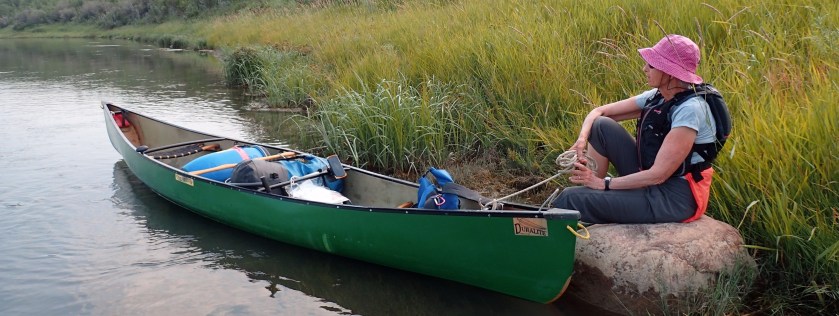
As Saskatchewan swelters through a prolonged period of extreme heat, we canoe two sections of the South Saskatchewan River: the Chief Whitecap Waterway (134km, with lots of sandbars) and Saskatoon to Batoche (88km, in beaver territory). Our third week is spent Saskatooning, including cycling the variety-filled Meewasin Trail.
Chief Whitecap Waterway
A deeply-rutted road leads to our launch site below Gardiner Dam, the large embankment dam that impounds Lake Diefenbaker. These days most paddlers begin further down, at the town of Outlook, but the one of us with purist tendencies wishes to launch at the Dam, the official starting point for the Chief Whitecap Waterway.
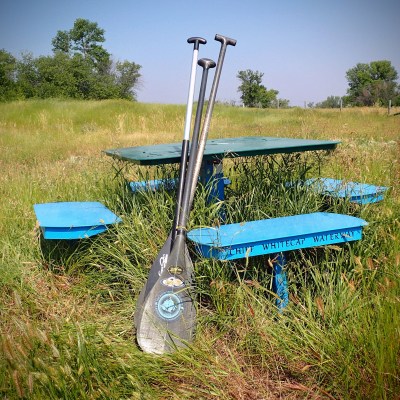
A picnic table marks the route’s beginning, and this is the only branded amenity we will see in our six days on the Waterway.
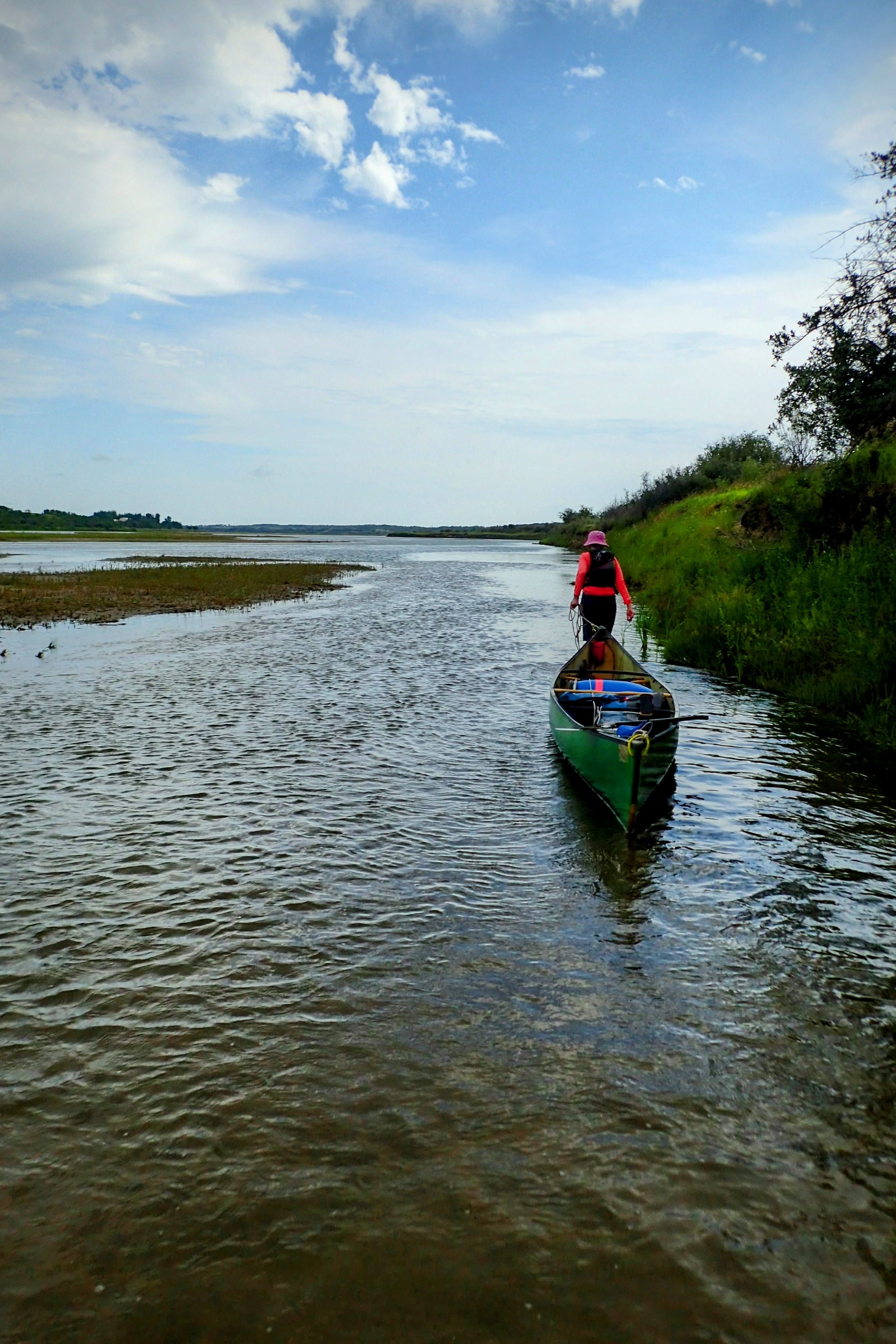
Sandbars and storms are the key features of our journey. We do our best to read the water. A few times we misjudge, but this is not a problem, as the river is warm and gentle. We hop out and walk the canoe across a sandbar or two or three, and only once are we forced to backtrack.
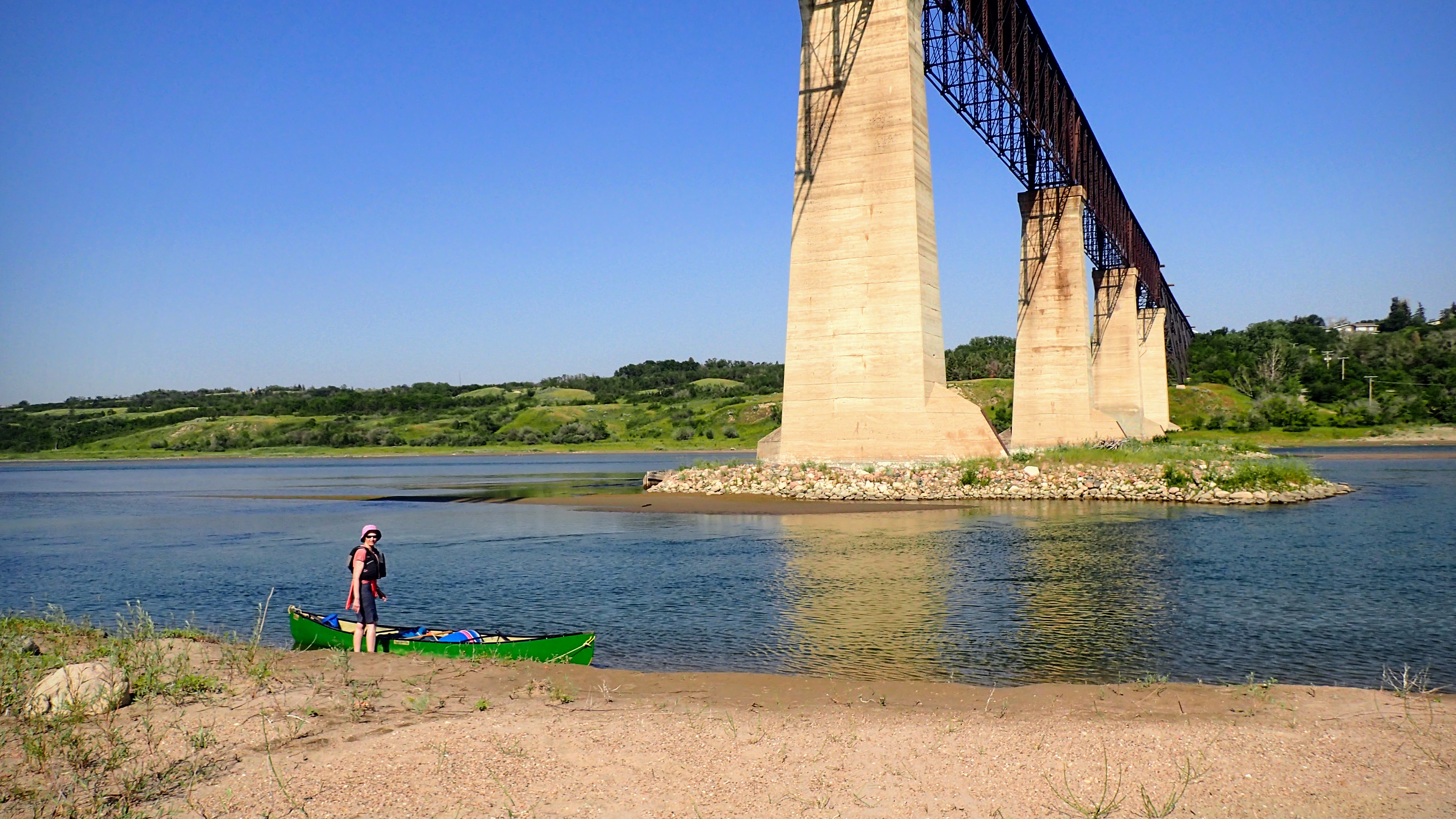
Outlook’s railway bridge has an attractive design, and the pillars create a sliver of shade, so we set up our first night’s camp here below it. Turns out this is a bridge of historical significance, with a design known as Whipple Truss. The bridge was converted for pedestrian use, but closed in 2013 due to failing substructure and severe risk of collapse. Lucky for us, it does not fall down tonight.
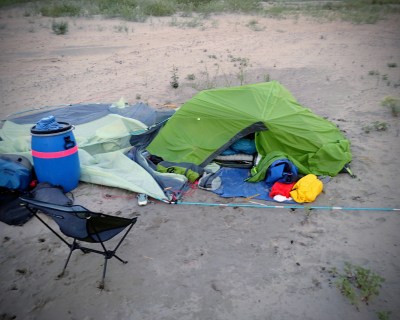
At Big Pipe a beaver slaps his tail – a warning – and then all Hell breaks loose. With his sleeping mask on and his hearing aids off, Doug doesn’t notice the lightning and thunder until the storm punches a hole in our tent, collapsing it. The hole is patched with pink duct tape, but we are rattled. Thunderstorms are ho-hum here in Saskatchewan, but for us Vancouver Islanders, thunderstorms are rare and scary events. The next morning’s forecast is for a 40kmph headwind, but headwinds we Islanders know how to handle.
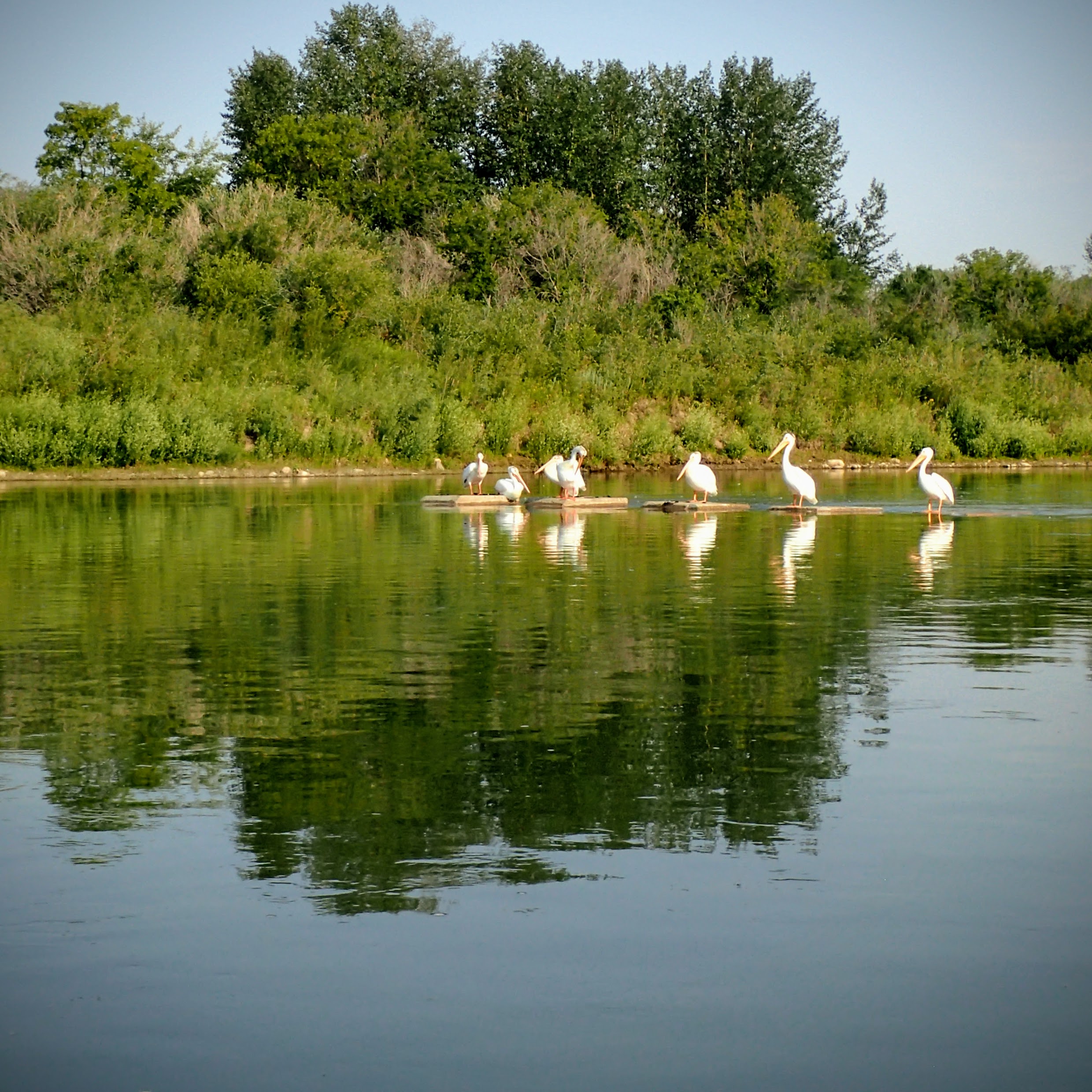
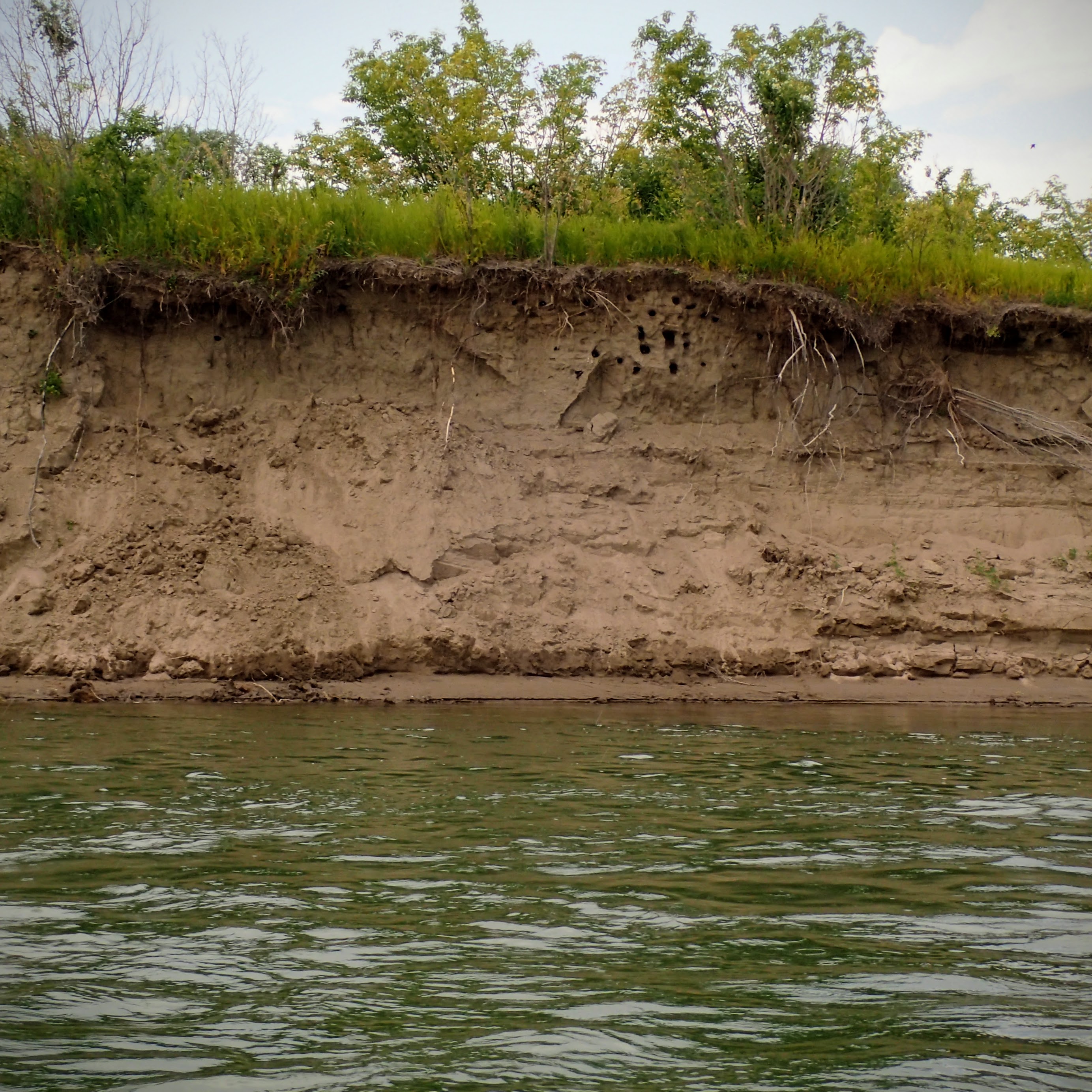
Pelicans, kingfishers, bald eagles, bank swallows, merganser families, beaver lodges, irrigation pumps, and cows are sights along the Waterway (official distance, 131km; as paddled, 134). Toads are common, too; they like to explore our dry bags, and four of them try to hitch a ride in our canoe.
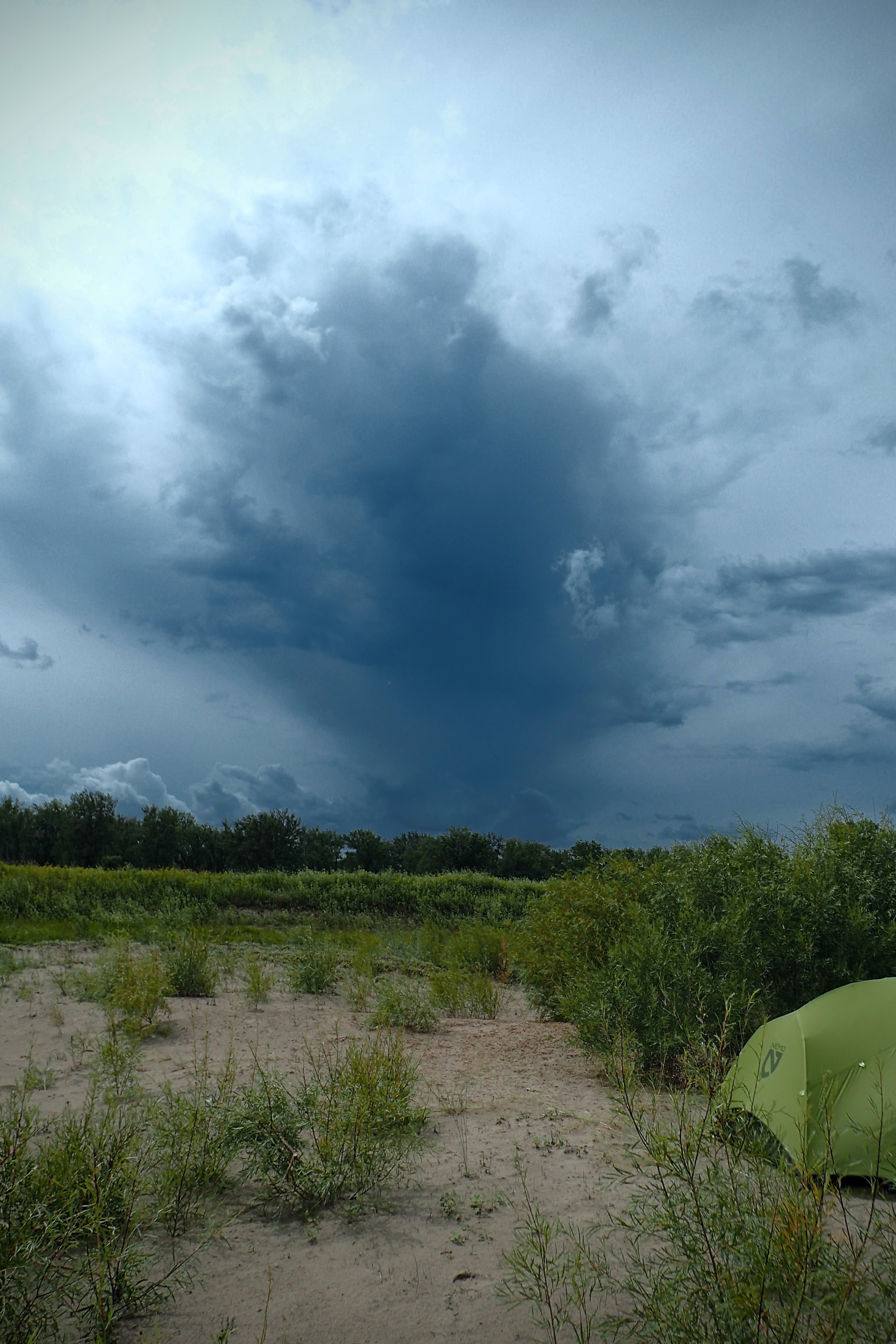
Night four brings another severe thunderstorm, with all-night lightning and tent-rattling wind. Night five we have a Funnel Cloud warning – what next?
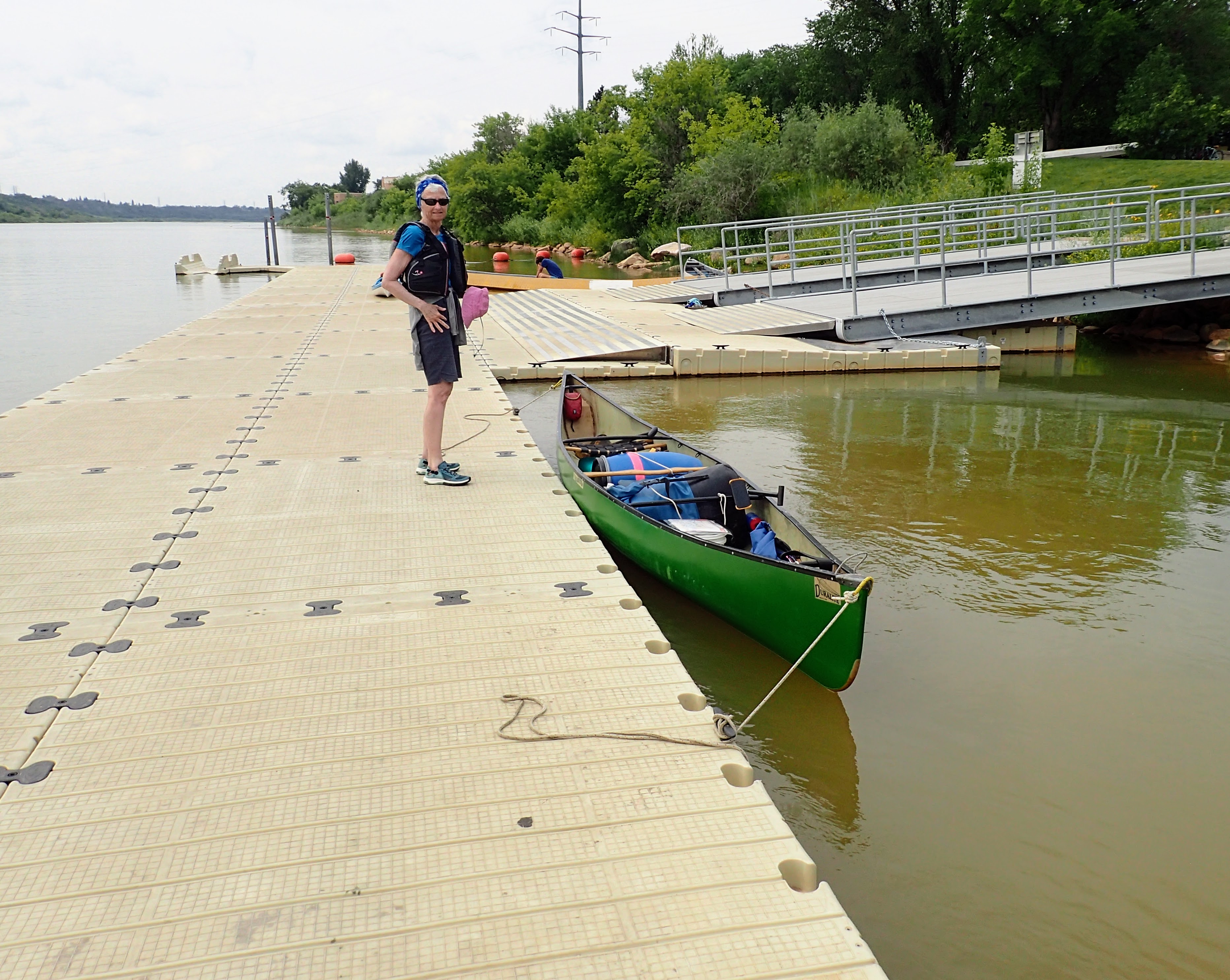
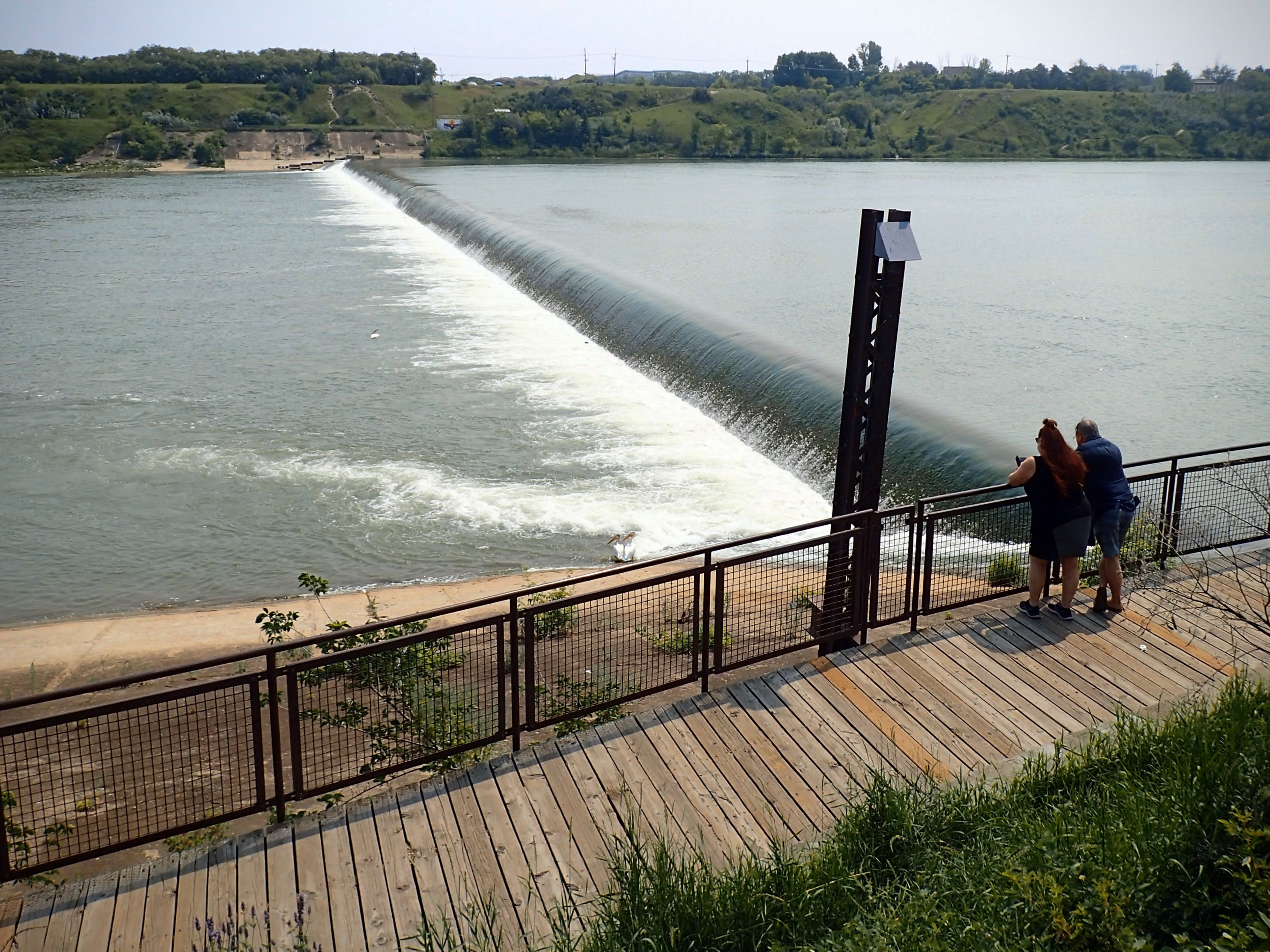
People appear as we approach Saskatoon on day six. People on land walking dogs, people on the water in canoes, kayaks, paddleboards, and inflatable floating toys. The Saskatoon Boathouse is our take-out point and the end of South Saskatchewan River Phase I.
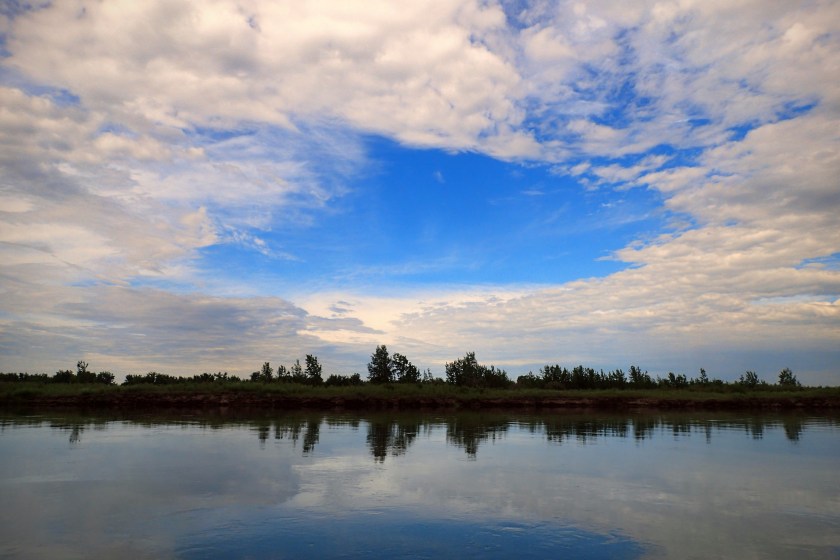
Announced with great fanfare in 2015, The Chief Whitecap Waterway has not yet become a top canoeing destination. It’s a designated, official water-trail section of the Trans Canada Trail, but for now this section of prairie river remains a canoe route for a niche market: locals and the occasional visitor with novice-to-intermediate skills.
Fur trade territory
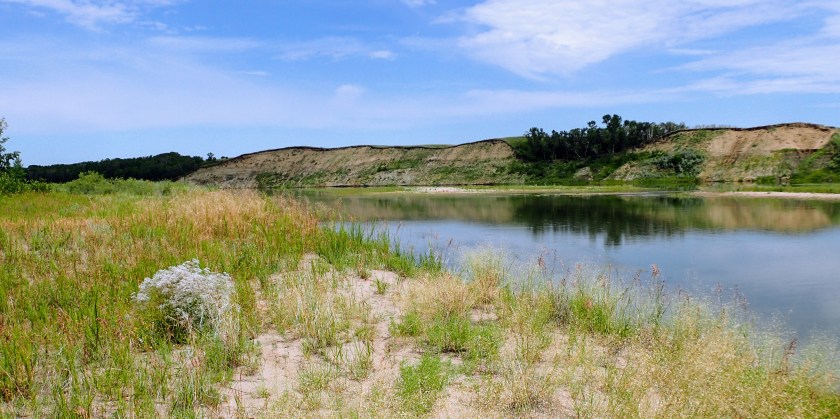
Where have all the sandbars gone? As we launch below the Saskatoon Weir for Phase II of our canoe trip, the River is changing character. There are big rocks (easily avoided) scattered in the channel, a few swifts, and small rapids below the cable ferry crossings. Cattails and grassed terraces have replaced the sandy shores of Phase I. The terrain becomes more wooded, with aspen and poplar, and more hilly, with sections of cliffs and hoodoos. This is the Aspen Parkland zone, where prairie grassland transitions to the more dense boreal forested regions of the north.
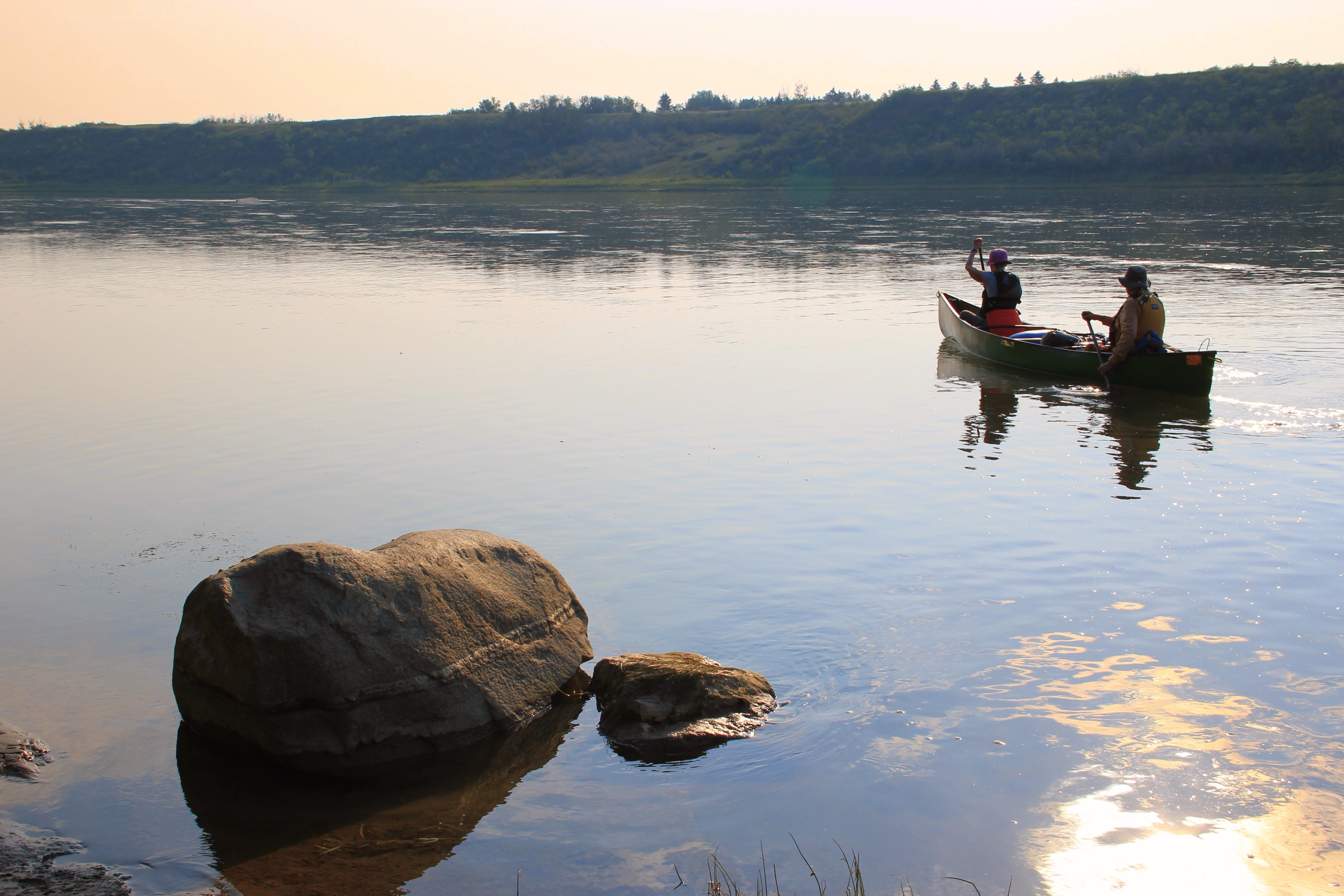
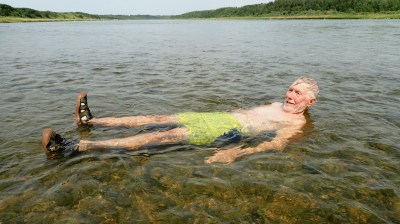
It gets hotter every day. The heat and the stillness put us into survival mode. We paddle in the mornings (20-25km each day), then spend the rest of the day trying to avoid heat exhaustion. For beavers the shoreline is ideal, as campsites for humans, not so much. For Doug, a campsite should be level and soft, but he is forced to alter his priorities. We end up at campsites we name Lumpy Island and Boulder City, because the swimming access – his new must-have – is good. Every 15 minutes or so, we wade into the river to cool off.
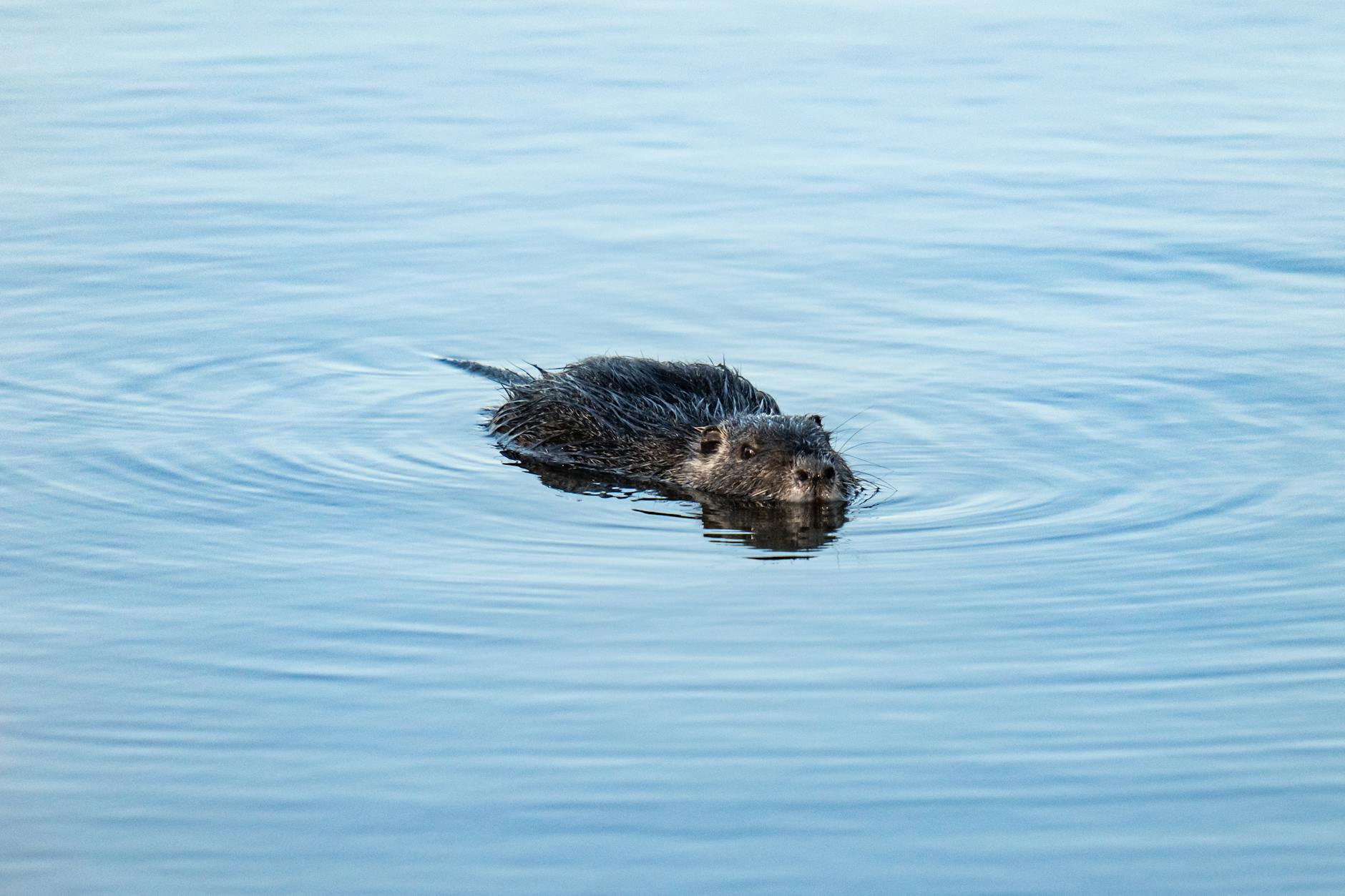
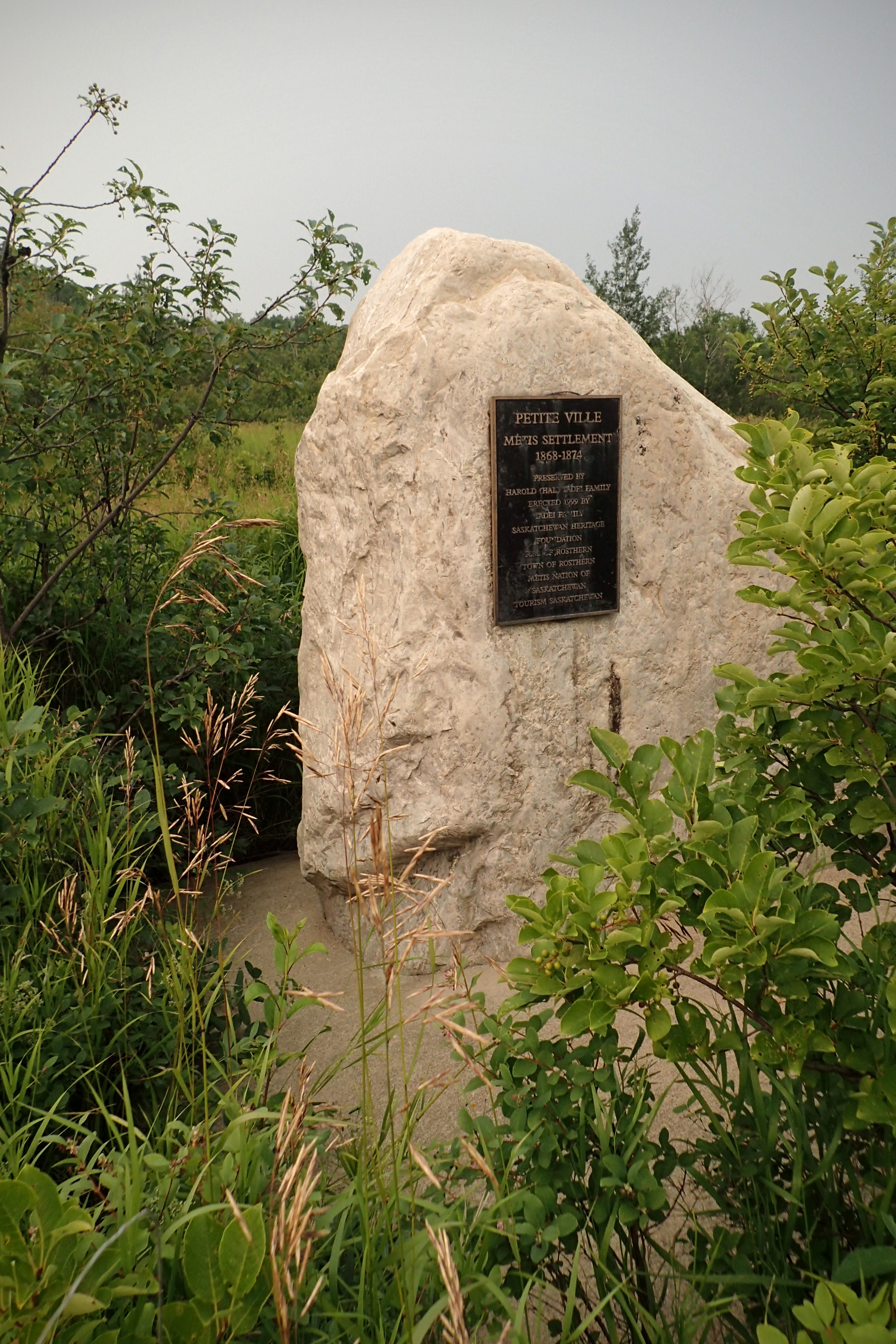
We see two or three beavers every day, and – cute alert – a baby beaver welcomes us to Petite Ville, a heritage site with archeological remains of an 1870s Métis wintering village, abandoned as buffalo declined. We encounter an increasing number of merganser families. Mother mergansers see us as a threat and take evasive action. The pelicans may waddle a step or two as we glide by, but otherwise they show no fear.
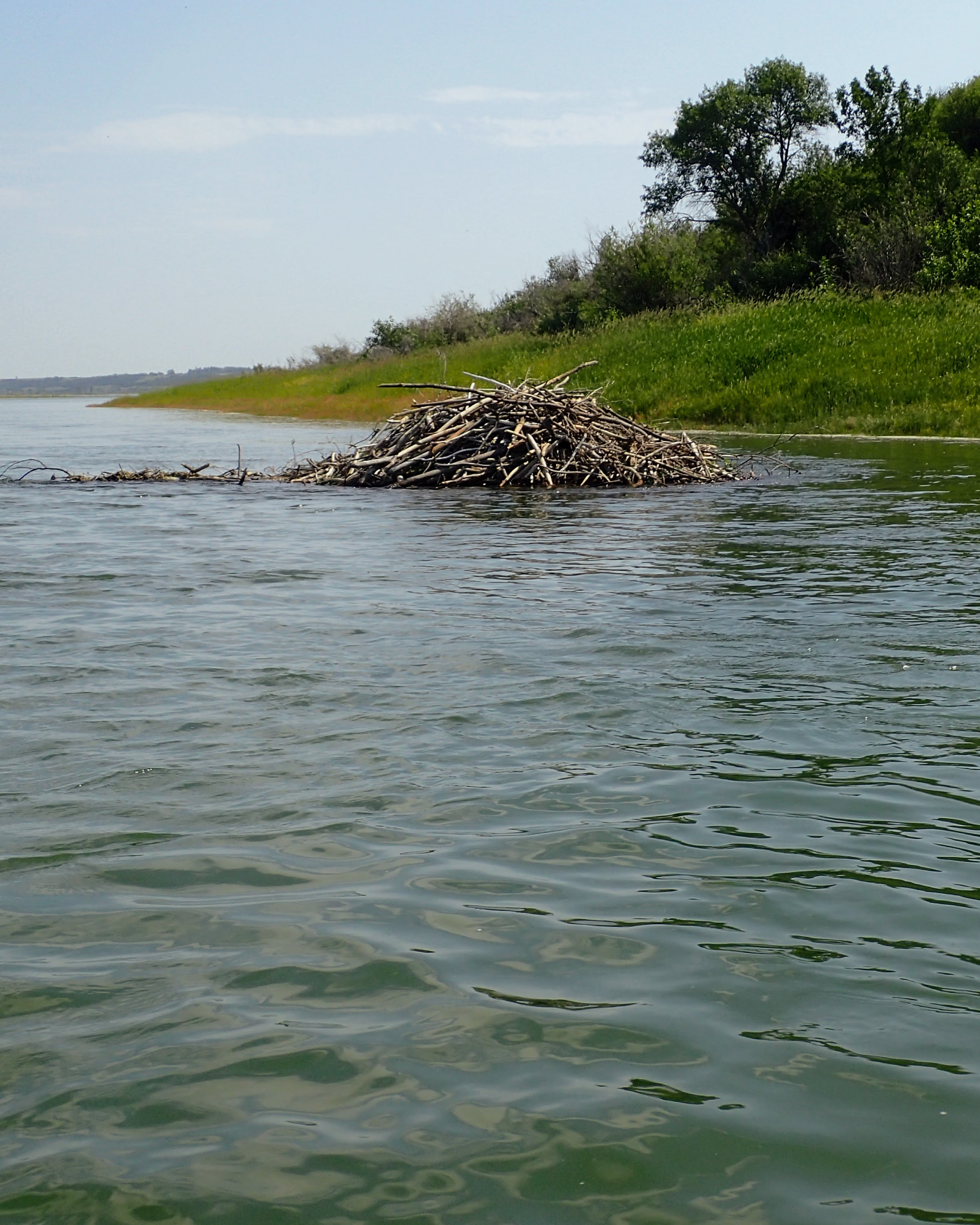
The town of St. Louis is our planned destination, but at Batoche we decide to bail out. Of course we are a bit disappointed. We’ve been humming Meet Me in St. Louis (title song of the 1944 Judy Garland musical film) for some time now, but being hot is hard work, and stopping now feels like the right decision. As we toss our gear up a beaver slide onto the grass near the East Village of Batoche National Historic Site, our phone beeps with Breaking News: Joe Biden, too, has opted not to continue. Let’s call it conscious aging.
At the Historic Site’s air-conditioned Visitor Centre, we browse the exhibits on 19th century Métis settler life and the Northwest Resistance of 1885. Cliff rescues us and drives us along washboard roads, across the St. Laurent cable ferry, and back to Saskatoon.
Whys and wherefores
Saskatchewan is not the most popular tourist destination in the country, so you may be wondering how this trip came about.
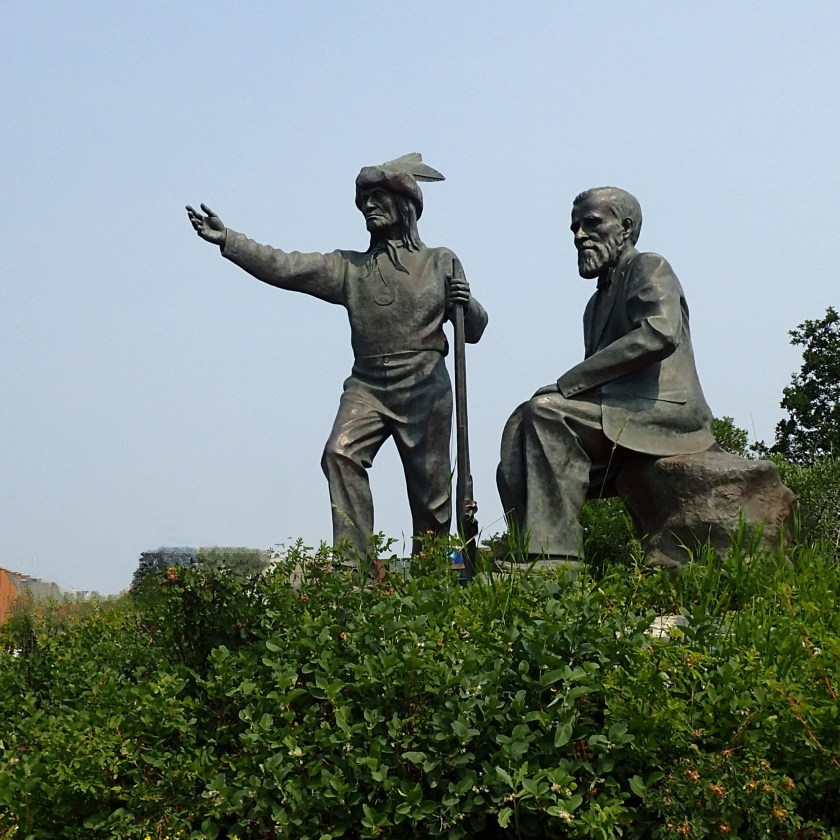
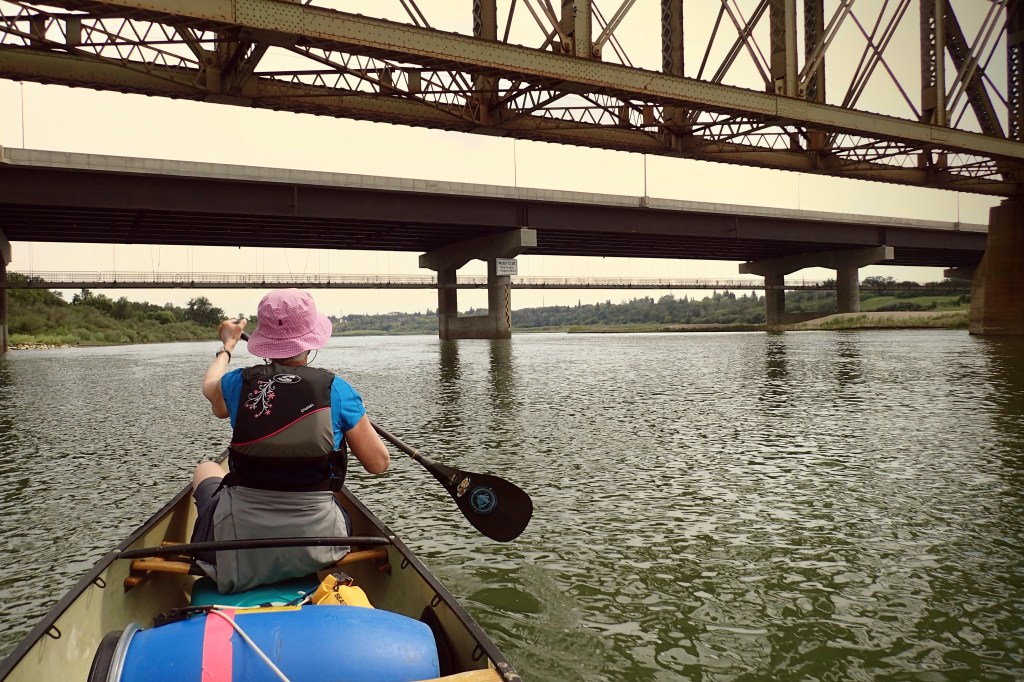
note suspended bike trail
Where will our Aeroplan points take us? Saskatoon, suggests Air Canada’s Points Finder Tool. We have never been to Saskatoon, nicknamed Paris of the Prairies and the City of Bridges, with ten bridges (eight traffic, two railway) spanning the South Saskatchewan River. Wait – didn’t our canoeing friend Don once tell us that the South Saskatchewan is a river we would enjoy?
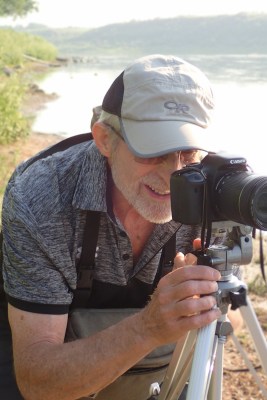
The CanoeSki Discovery Company website provides in-depth information on the South Saskatchewan River. Owner/director Cliff is the local expert, in the eco-adventure business since 1990. In 1994 Cliff was the canoeing consultant in a team of four who gathered data on the South Saskatchewan between Gardiner Dam and the Forks (where the North and South Saskatchewan Rivers join). Since then he has provided guided trips, canoe instruction, rentals, shuttles, and photography from his base in Saskatoon. Cliff is generous in sharing his expertise. After a two-hour phone call, our trip plan is created, with Cliff providing a rental canoe and shuttle service.
Hot on the trail
How hot was it? One day with cellphone connection, the Humidex was 48 degrees Celsius, and our phone nattered with air quality and extreme heat alerts, urging elderly people to remain indoors in air-conditioned spaces. On the hottest days we were off the grid, but we can report two indicators: our mineral sunscreen, usually heat-stable, turned to a hot liquid, and all by itself our phone beeped a message “shutting down due to extreme heat.”
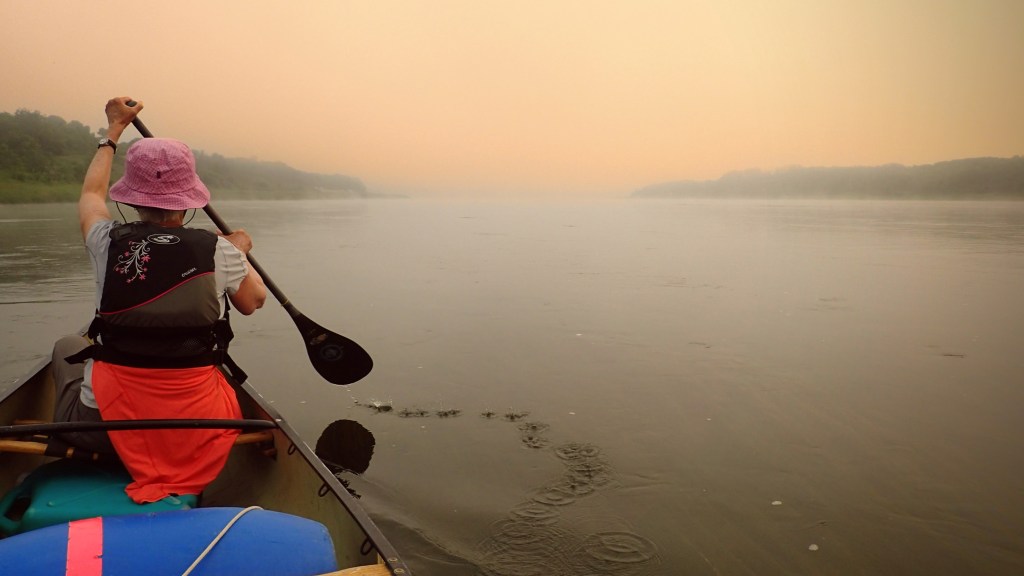
Our tips for keeping cool:
- Swim or sit in the river at frequent intervals. Use your bailer, that splendid multi-purpose tool, to pour water on yourself.
- When paddling, dip your hat and shirt into the river. The water trickling down your back will help while waiting for the next swim break.
- Bring a shade umbrella, but don’t leave it unattended. We begin the trip with a pop-up sun shade, but it is destroyed in the day two thunderstorm. We find a use for its carrying case, though: it makes a handy tote for transporting loose items (water bottles, map case, pfds) from shore to the campsite.
Saskatooning
Saskatooning is the city’s cute verb for exploring Saskatoon and for feeling its spirit. What better way than cycling the magnificent multi-use Meewasin Trail, which runs 105km on both sides of the River. From our base at Gordon Howe Campground, we cycle a portion of the Trail that wanders under bridges, through parks, past statues, and on to the Wanuskawin Heritage Park (a 40km bike ride, return).
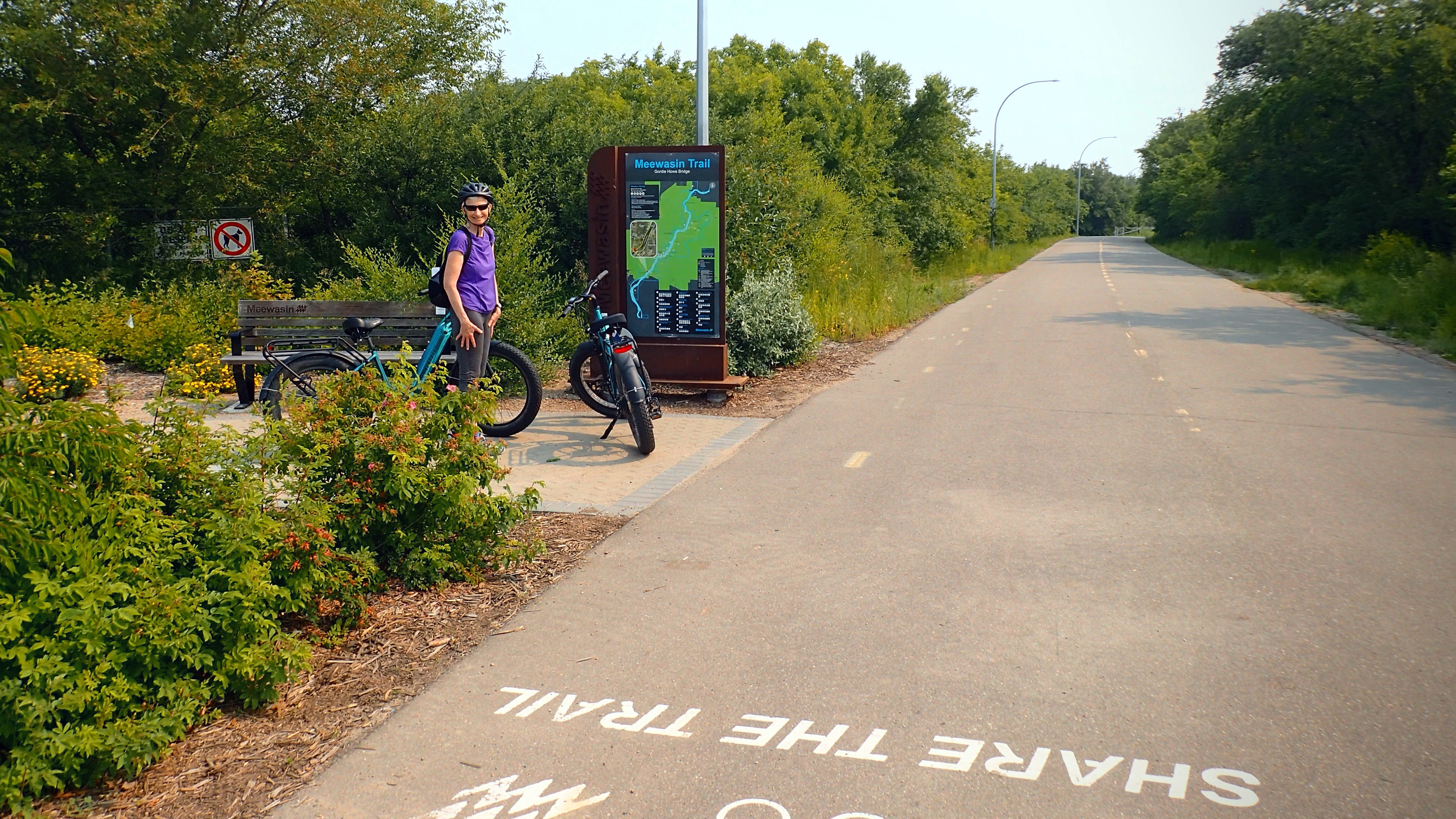
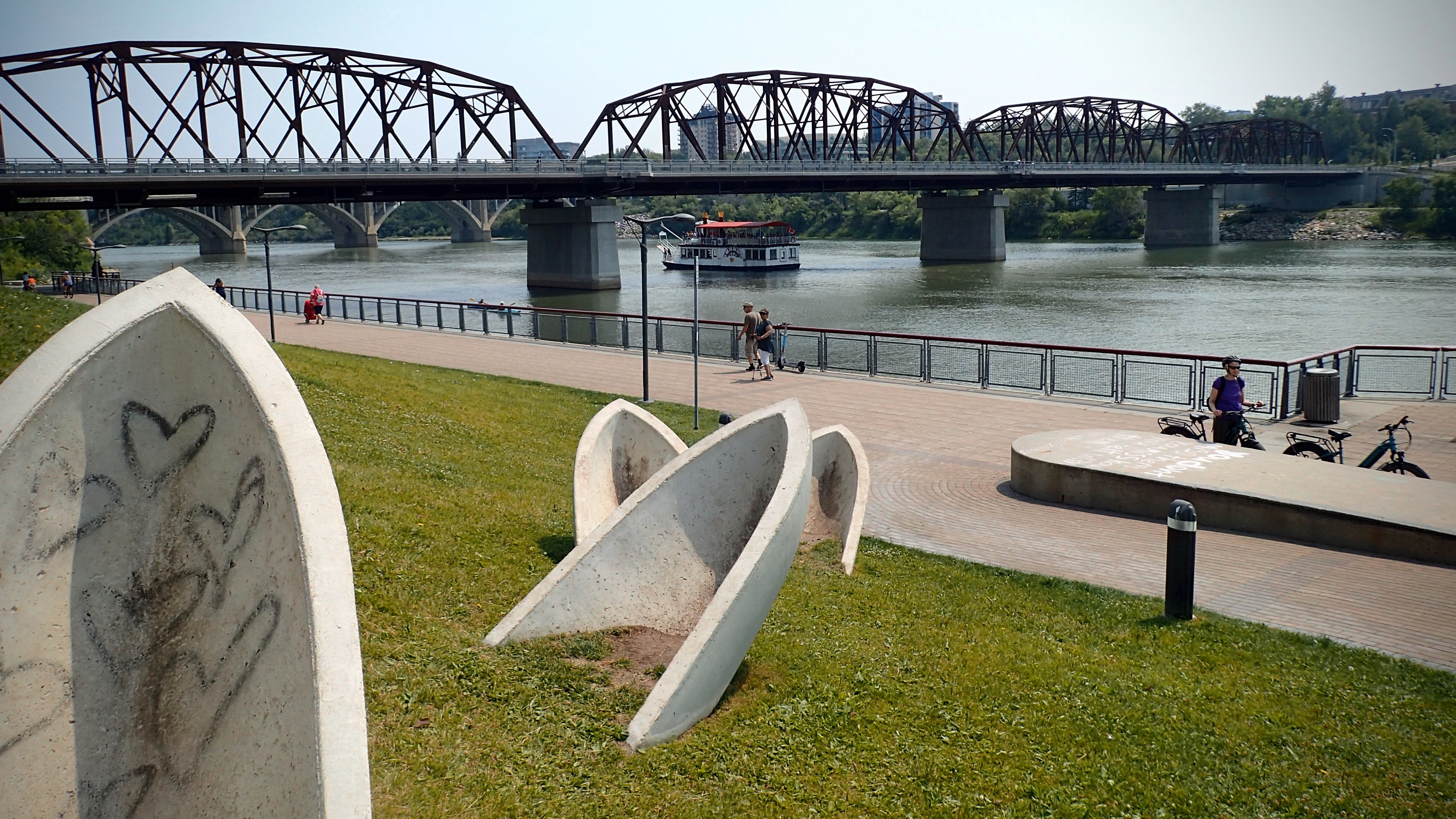
Why do people come to Saskatoon? Here is a sample of reasons, based on the non-random sample of people we encountered: Saskatoon is friendlier and more affordable than other provinces, according to new residents. People come to visit family and friends. For some, Saskatoon is a stop along the way, part of a cross-Canada tour or en route to a wedding in Ontario. For one cycling fellow we meet, Saskatoon is a detour from his attempt to cycle the Great Divide Trail.
Last words
The heat (and the bugs) upped the suffer score for this trip, so why go? For the swish of the paddle, the actual canoeing; paddlers will understand!
And for the dusk, that period of time just after sunset. The temperature drops a degree or two. We sit on our Helinox chairs and enjoy the show. A mother deer leads her fawns to the river for a drink. A beaver glides along the shoreline, searching for that perfect twig. A flock of pelicans flies upstream to their night time resting spot. We made it here, self-propelled, together. Life is good.
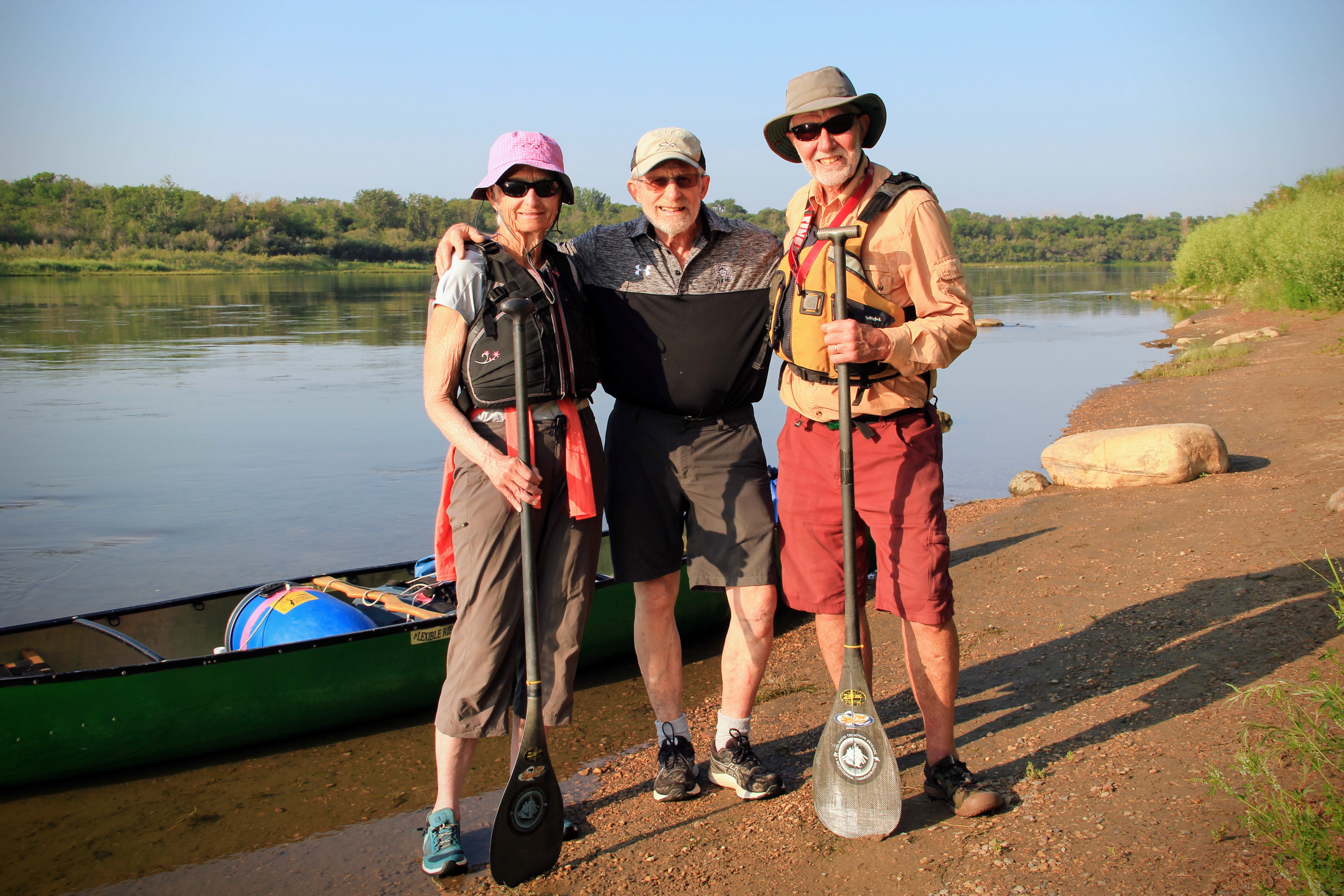
Thanks are owed to Batoche National Historic Site, for the ride that saved us a hot two-kilometre walk to the Visitor Centre. Even more thanks to Cliff, canoe consultant extraordinaire.
 Boots Boats Bikes
I am in total awe of you two. I seem pretty lame compared to what you do. Keep on “trucking”. You know canoe and bike. Margaret
LikeLike
Thanks, Margaret. Always good to hear from you. We’ll be “trucking” on in a few days to the Yukon for a family paddle on the Teslin and Yukon Rivers.
LikeLike
Wow, good luck on your next adventure. Take care and have fun.
LikeLike
You two are inspiring! Keep up the wonderful adventures and sharing them with us.
LikeLike
Thanks for your kind comments. We hope to read some more of your adventures, too.
LikeLike
Unlike my sister, writing is not my forte. I post my photos, with a little commentary, on my Facebook page. I try to remember to make albums for trips and major events. The page is public, so feel free to drop by. Happy travels!Linda
Yahoo Mail: Search, Organize, Conquer
LikeLike
Thanks Doug, We really enjoyed your & Cathy’s report. It sounds like a great adventure &, as always, to every misadventure, there’s a bright side too: the positive unexpected.
So I gather we’re upstream of where you were, at Waterton Lake. We drove the VW camper 4 days across S. BC to get here. It’s been very hot here too & hazy with all the smoke from wildfires.
Because of that we haven’t done as much hiking as we might have but have enjoyed our time near the lake.
We’ve encountered a number of Saskatooners, including a 60+ member Bengali family reunion tour & their bus driver. Apparently they represented 2/3 of the extended family living in Canada.
We “Whities” are really in the minority, or so it seems.
We turn the van over to son Richard & family, in Calgary on Saturday & then fly home, where we’ll await their arrival & that of our daughter’s family rom NS.
Hope the trip with family, in the Yukon, goes well & that you have more reasonable weather conditions.
All the best, David
LikeLike
Thanks for your comments, David. Hope you check out the Carthew-Alderson hike in Waterton Lakes. It has always been one of our favourite hikes. I think I’m too old to to attempt it again. Hope your family reunion goes well. Best to you & Gillian. Doug
LikeLike
Thanks Cathy and Doug for your inspirational account and a wonderful counter to anyone who dares mention ageism. May life continue to be a great adventure.
LikeLike
Thank you, Shaun. Yes, we chose not to age in place but to do it elsewhere. Best to you, Penny and Lucy.
LikeLike