
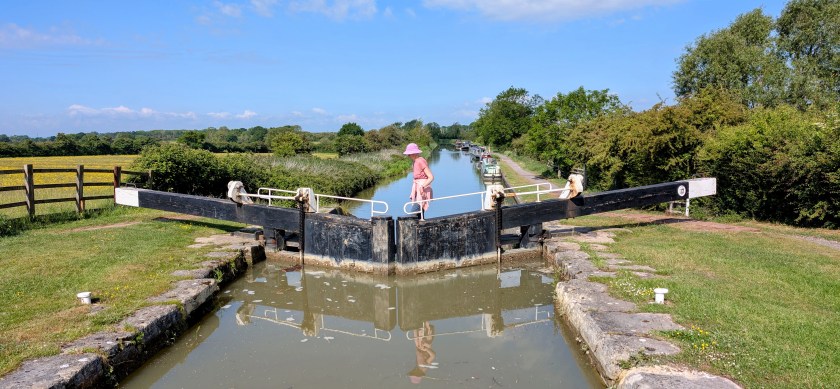
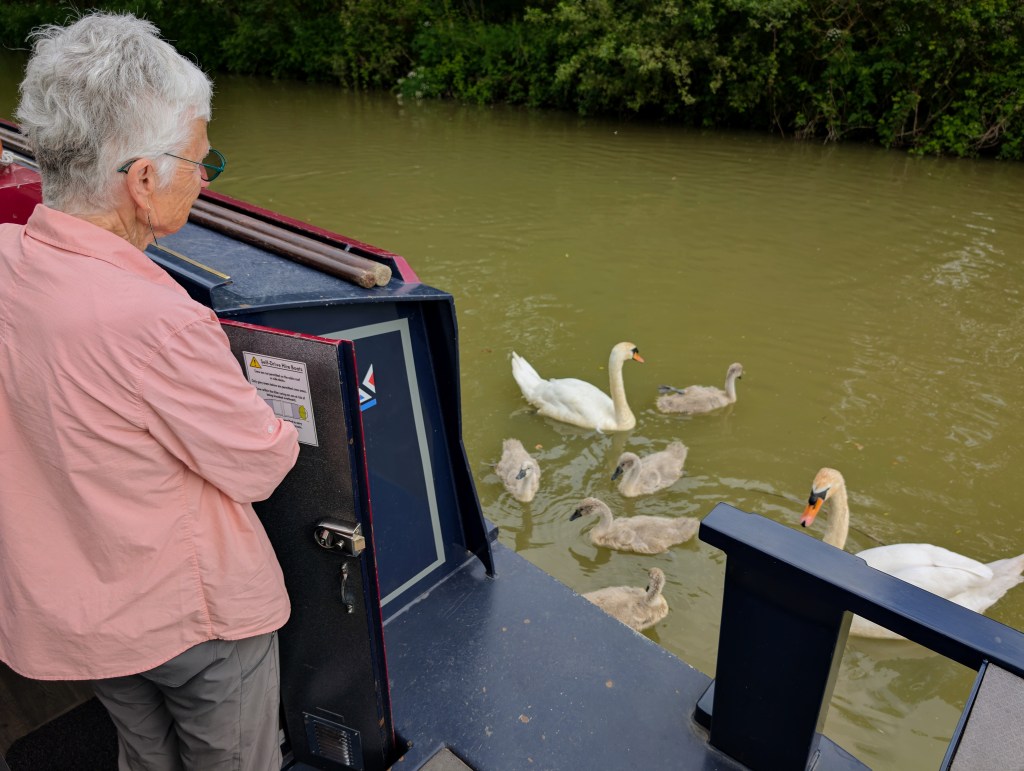
Thirty-seven user-operated locks, nine swing bridges, two aqueducts – out and back. Protective swan-parents, oncoming boats, shallow water, strong winds, a hail storm: hurdles we negotiate on our fifteen-day narrowboat holiday on the Kennet and Avon Canal in southern England. The obstacles are also opportunities – to problem-solve, to meet people, to work together, and to receive advice and assistance from experienced canal boaters. And we learn a new word: leucippotomy.
The Canal Age
Oh, the Great Canal Age! All that 18th and early 19th century civil engineering that fascinates Doug, who loves to see how things work.
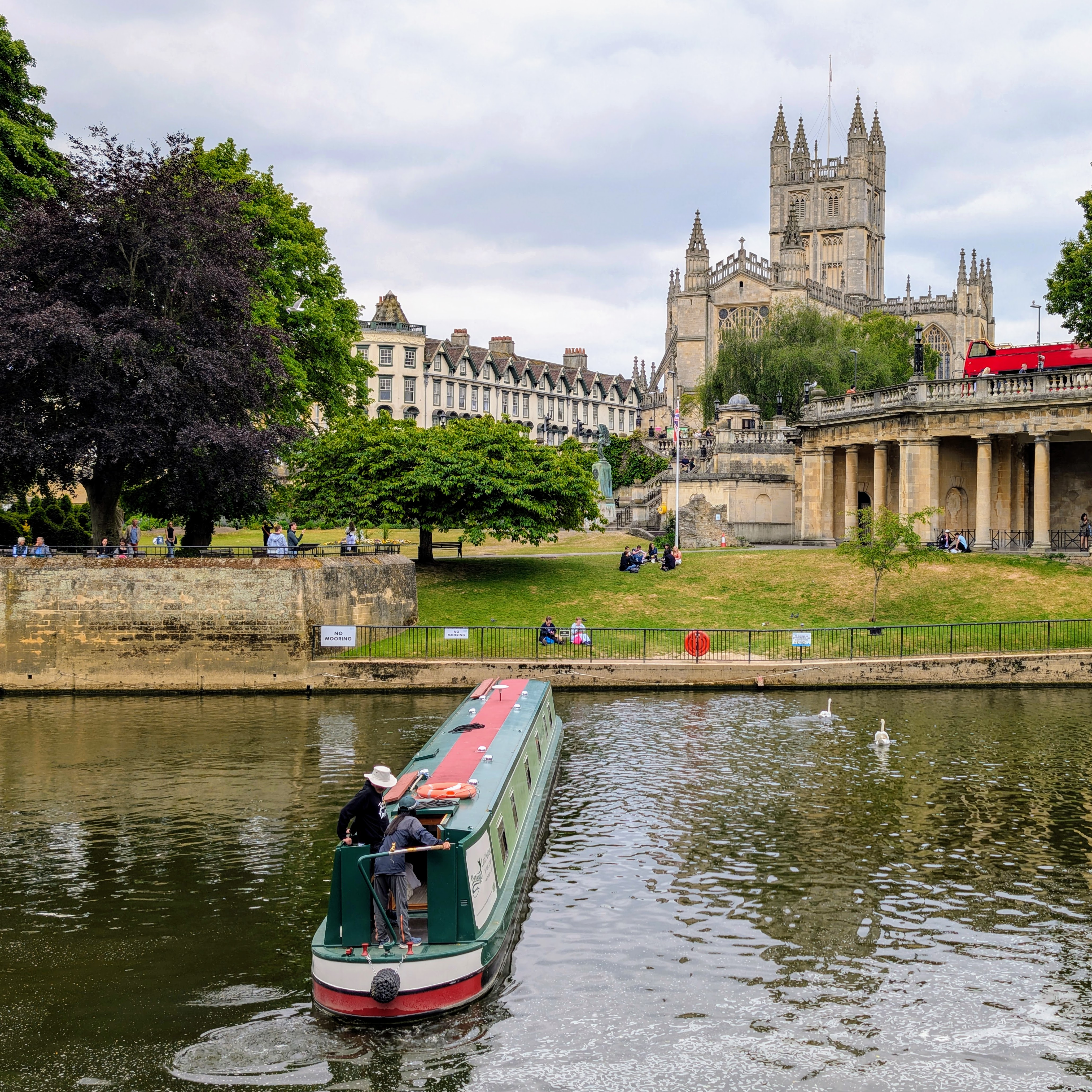
Our Cotswold Way walk ends in Bath, where, conveniently, a canal runs by, and plenty of hire-boats are available.
Built over 200 years ago, the Kennet and Avon Canal links Bristol to the River Thames via a man-made waterway between the rivers Avon and Kennet. Once a prosperous trade route, the canal fell into disuse following the construction of the Great Western Railway. Today, it has been restored , largely by volunteers, and was fully reopened in 1990. The canal network now is managed by the Avon Canal Trust and used primarily for leisure activities such as canal boating.
Facts about narrowboats
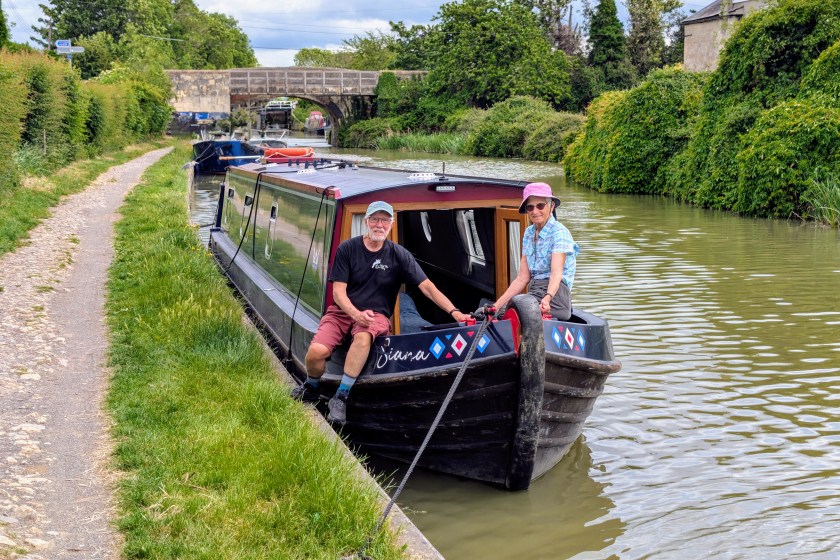
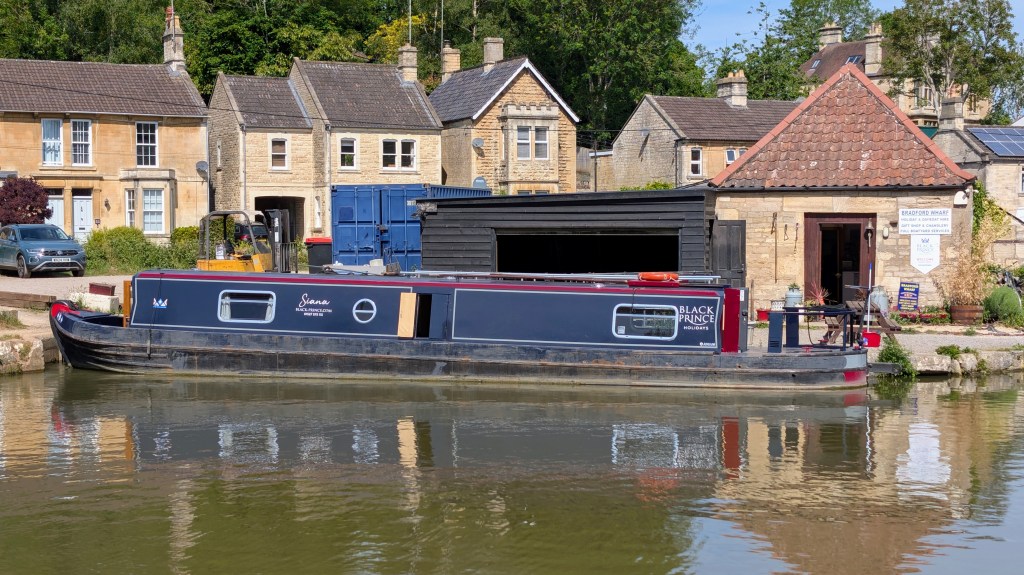
Narrowboats are narrow (a smidgen under seven feet in width), but they are long and can be unwieldy for novice boaters. As narrowboats go (some are 70 feet long!), ours is on the short side. Named Siana, our 47-foot boat is “an ideal choice for couples, especially beginners.” It is fully-equipped with a kitchen, washroom with shower, and a double bed.
Narrowboats are slow. Four miles per hour is the speed limit on most canals, but rarely is it safe or polite to go that fast on the Kennet and Avon. Two miles per hour, tick-over (idling) speed, is recommended when passing moored boats, which line much of the route. Two miles per hour – that’s slower than walking and about half our canoeing speed.
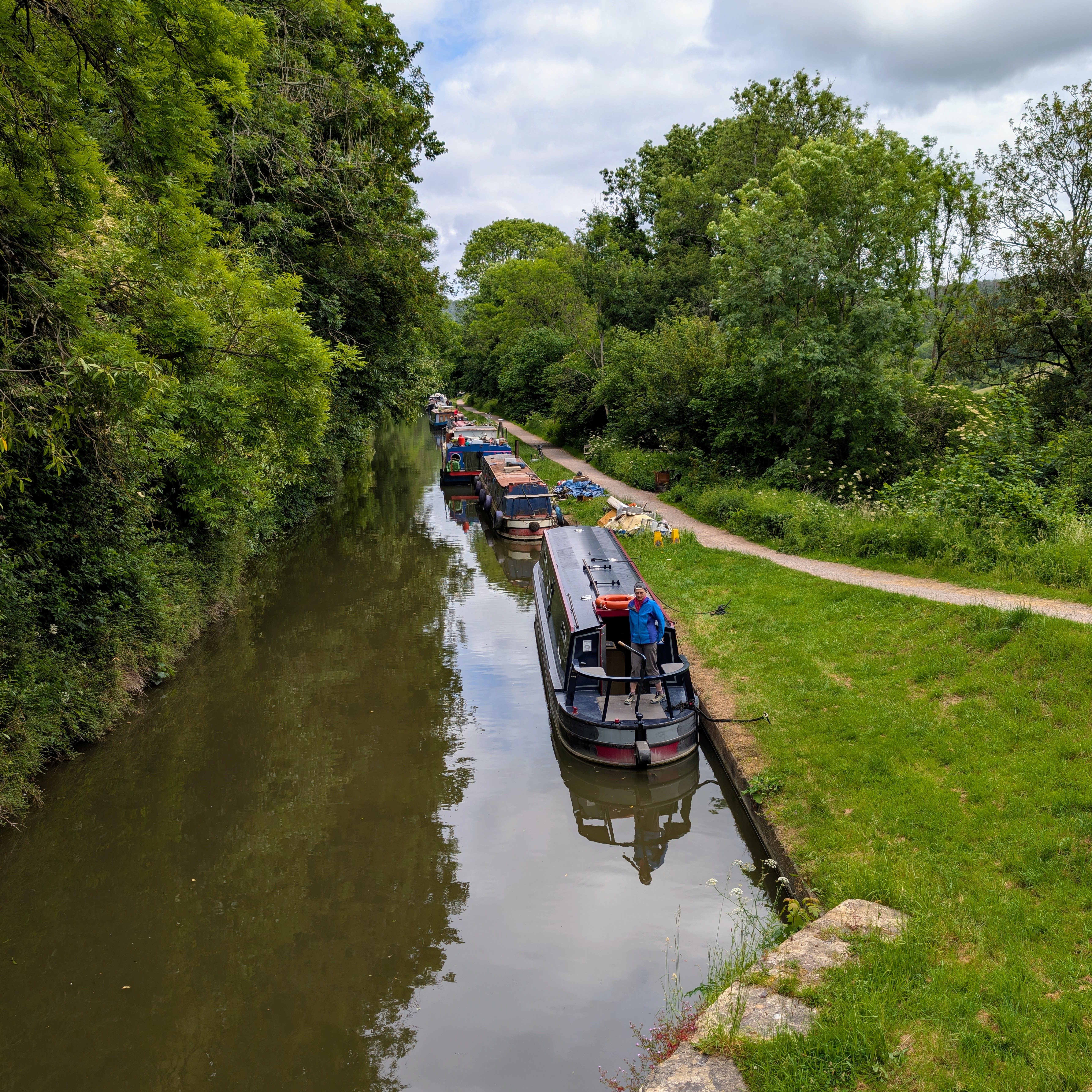
Narrowboats are popular. More than 35,000 boats are registered on the UK’s rivers and canals, and most of these are narrowboats. Around 9,000 are registered as live-aboard, and there are dozens of hire-boat companies.
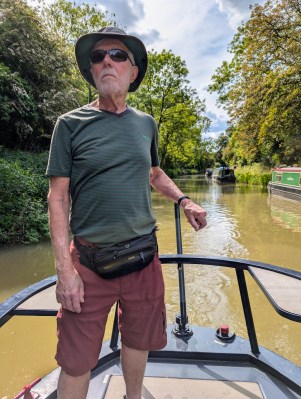
Some skill is involved. For Skipper Doug, the challenges are mental: remembering which way to turn the tiller and remaining patient at tick-over speed and while locks are being filled or emptied. First mate Cathy gets the physical challenge: operating the locks and swing bridges. Limited strength, low mechanical ability, and fear of heights are not ideal qualifications for this job, but she manages, opening and closing one-third (25 out of 74) of the locks and most of the swing bridges entirely on her own.
Our route
We begin our adventure at the Bradford on Avon hire-base of Black Prince Holidays.
We head east towards the town of Devizes, where there are 29 locks in quick succession, including the famous Caen Hill flight locks.
After Devizes comes the lock-free Long Pound, an area that attracts a large number of live-aboard boat dwellers with narrowboats of various ages and states of repair.
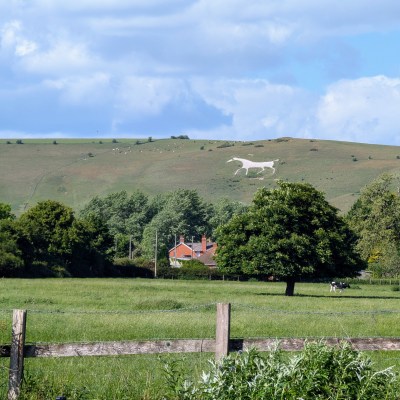
The delightfully-named village of Honeystreet is our turn-around point. We come this far because we want to see at least one of the white horses, chalk figures cut into the hillsides in Wiltshire county. We learn a new word: leucippotomy – the sculpting of white horses on hillsides by cutting away grass and earth to reveal underlying stone or chalk deposits.
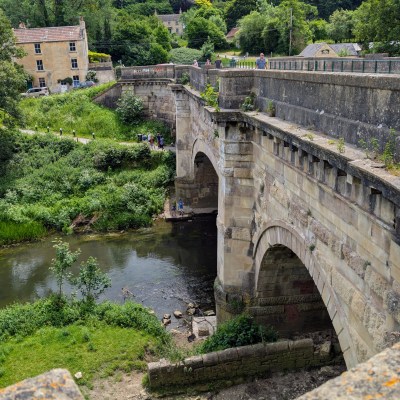
We spend another day transiting the Devizes locks, then head west through the Avoncliff and Dundas aqueducts to the Claverton Pumping Station, after which we return to base.
Many hands make light work
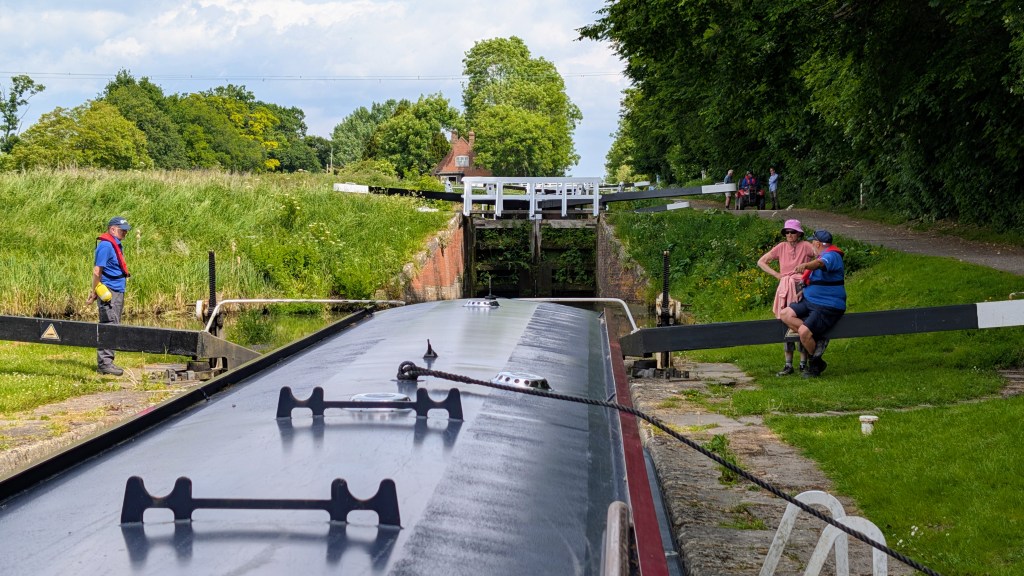
Our route is lock-intensive (37*2 = 74 lockages). The process is simple, but time-consuming, physical, and greasy. Four paddle mechanisms must be wound up and down with a windlass, and four heavy gates need to be opened and closed. These steps must be done in the proper order, which involves a lot of running back and forth and across the lock.
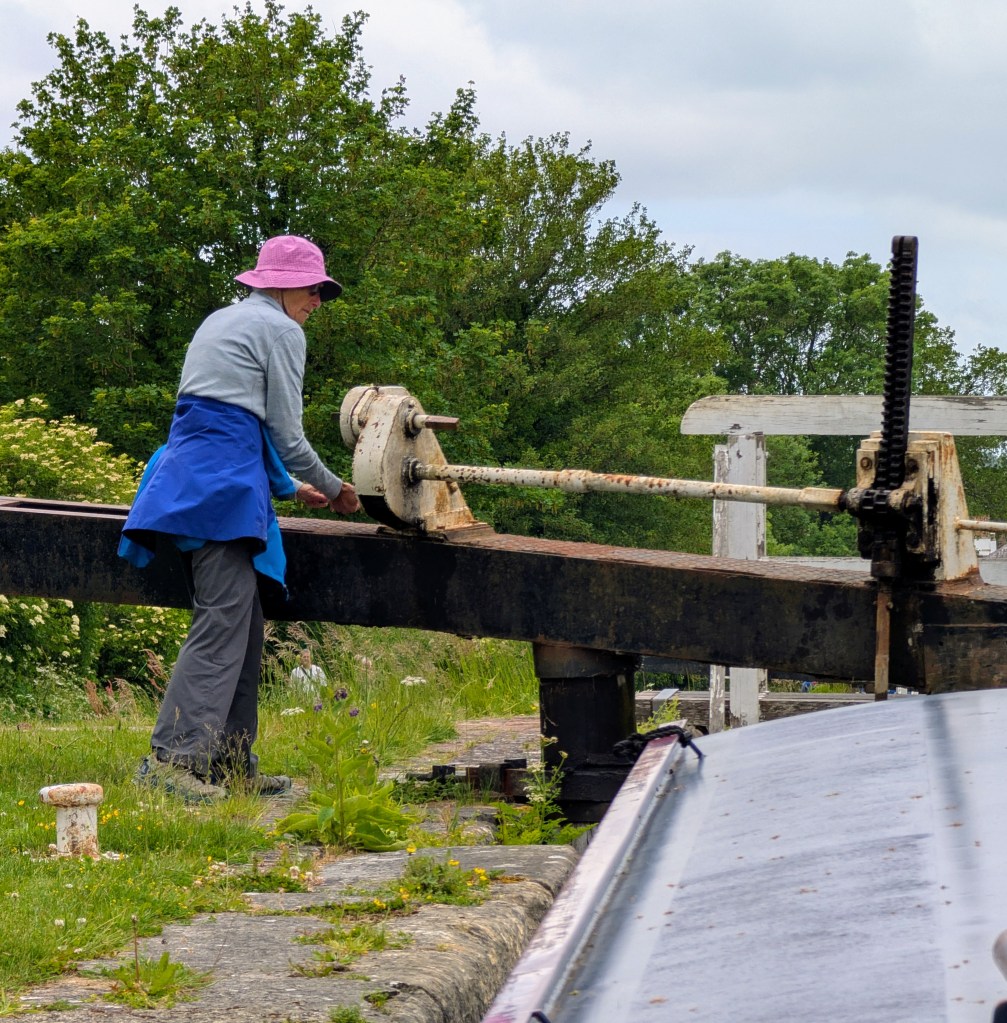
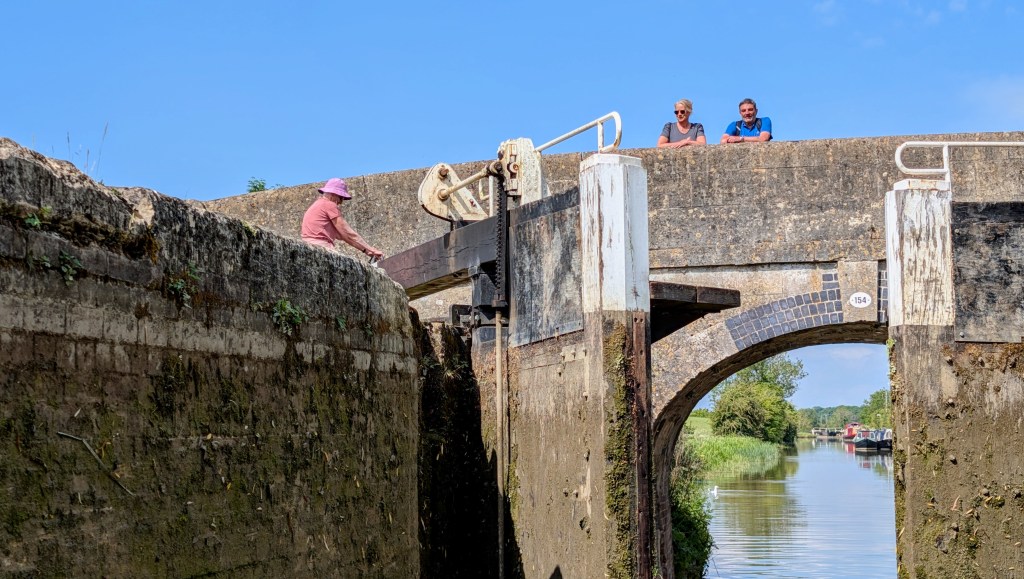
On the Kennet and Avon Canal, the locks are just wide enough to hold two narrowboats. When we are able to join with other boaters, locking-through is greatly simplified – and we make new friends in the process.
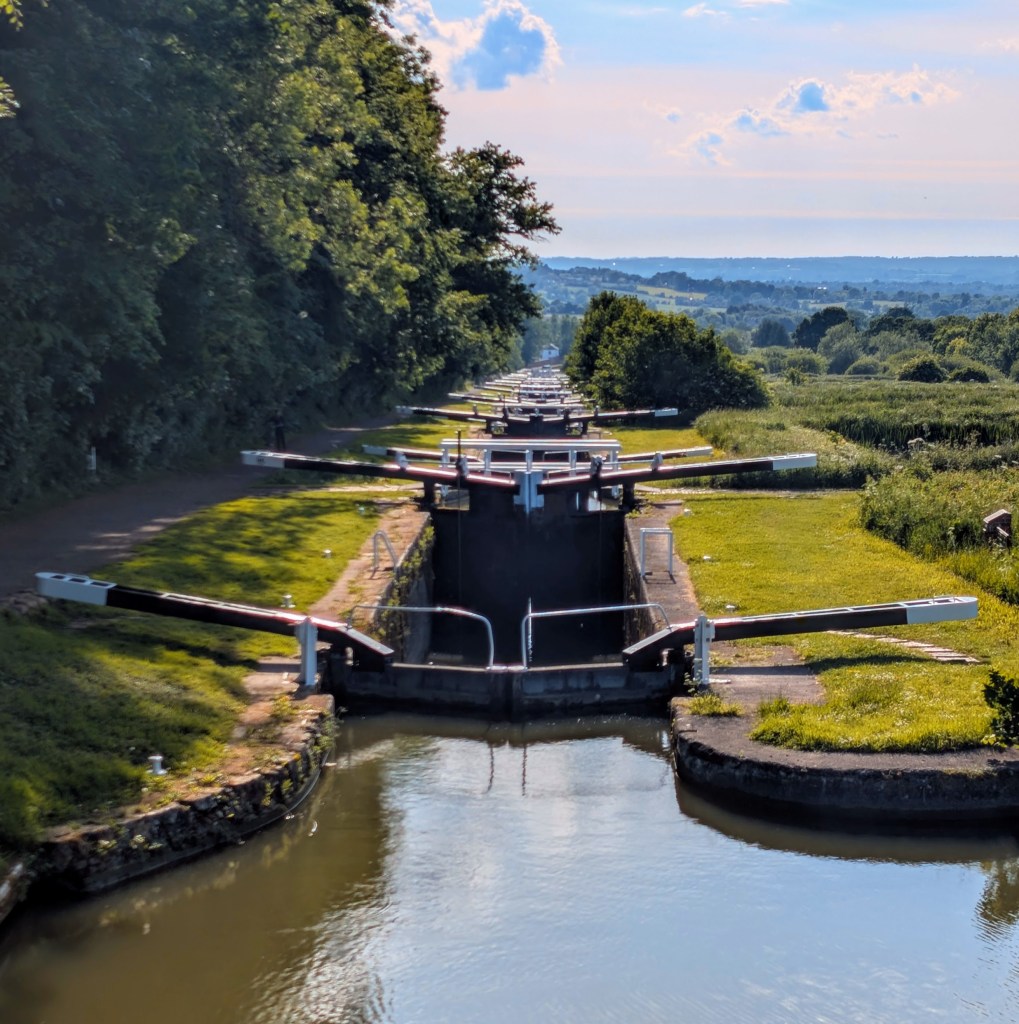
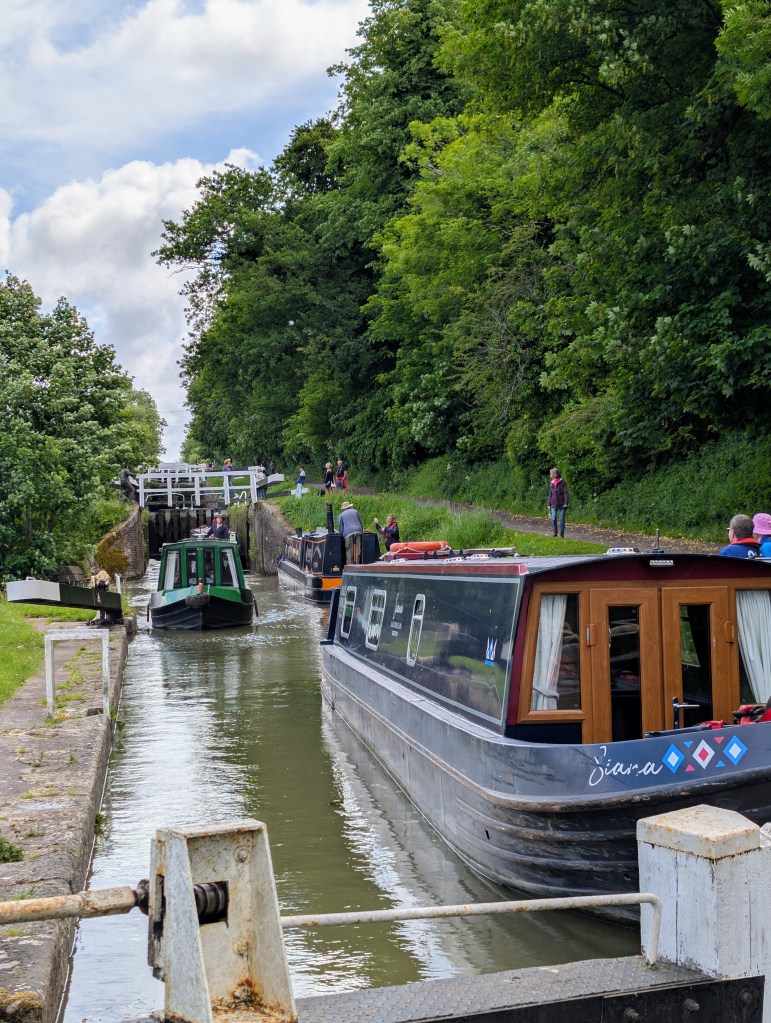
In a hailstorm a solo boater kindly helps us through our first two locks. We are forever grateful to Baz and the Friday crew of volunteer lock-keepers, who help us as we progress up the sixteen locks of the Caen Hill flight. On the return trip, we join the Admiral and crew of narrowboat Old King Cole for the Caen Hill and Foxhangers locks. After working together through twenty-three locks, it is sad to say goodbye.
A funny thing happened
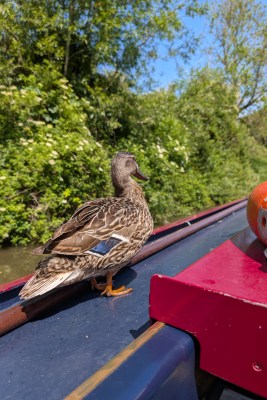
Near Claverton a confused mallard duck landed on our boat’s roof and rode with us for quite awhile, causing smiles from boaters and pedestrians we passed. When Doug suggested duck for dinner, Mrs. Mallard quickly found her way back to the water.
Is this funny? At poorly-designed Swing Bridge 178, Cathy gets stuck on the inaccessible side of the canal. With great effort, she pushed the bridge open just enough for Doug to squeeze the boat through, but now the bridge will not budge to be closed. Doug is not keen on swimming across to help push, so he throws a rope. With the rope tied to the bridge, Doug is able to pull it closed, and his first mate returns to the boat.
Memories
What did we enjoy the most on this trip? Our final thoughts and favourite memories:
Doug: This was a slow, often relaxing but sometimes intense, experience. I really enjoyed figuring out the challenges, such as how to rescue Cathy from the stuck swing bridge.
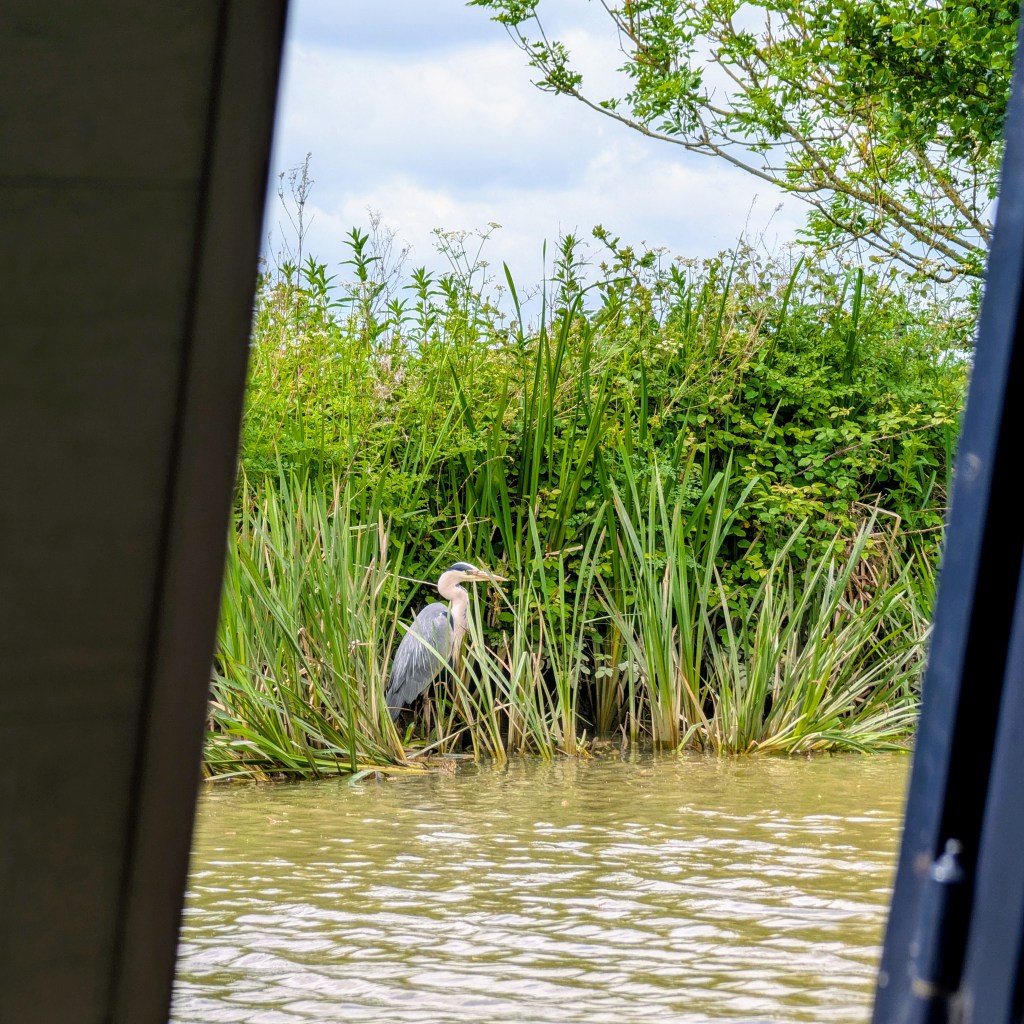
Cathy: I will remember the songbirds in the mornings, the swan poking his head through our open window, and the camaraderie and kindness of other boaters.
If you go
Contemplating a narrowboat holiday? Canal Junction https://www.canaljunction.com/index.htm and Canal & River Trust https://canalrivertrust.org.uk/ are good places to start.
We are happy to recommend Black Prince Holidays, but there are many other hire boat companies from which to choose.
Book early for the best prices and boat choice. Many hire boat companies offer discounts for early booking and for longer rental periods, e.g., fortnight rentals.
 Boots Boats Bikes
Great write up! So many locks!
LikeLike
The more locks the more exercise (for the 1st mate, anyway).
LikeLike